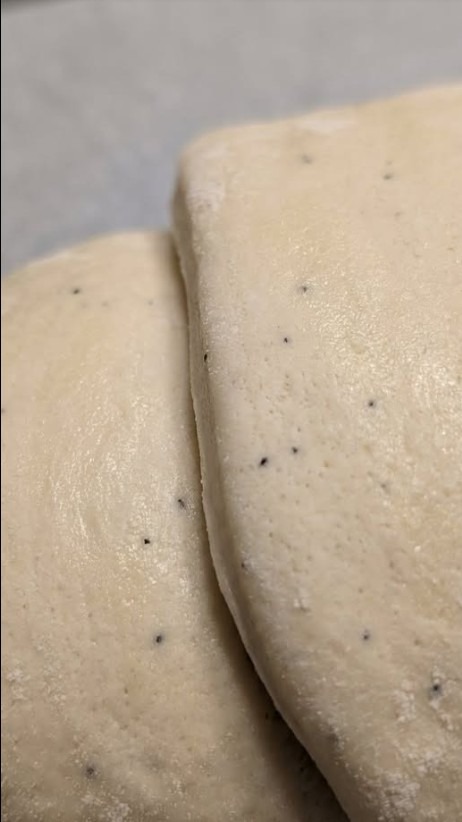
Tiny black dots on puff pastry are usually harmless and have a few possible causes. Here’s a detailed breakdown:
1. Natural Flour Specks
- Some flours, especially whole wheat or unbleached flour, can leave small dark specks.
- These don’t affect taste or safety—they’re just bits of bran or grain.
2. Spices or Seeds in the Dough
- If your puff pastry was pre-seasoned or contains ingredients like poppy seeds, black sesame, or cracked pepper, those can appear as tiny black dots.
3. Slight Burning During Baking
- Puff pastry layers are thin; sugar, butter, or flour can brown too quickly in spots, appearing as black dots.
- Usually occurs in hot spots in the oven and isn’t dangerous.
4. Mold (Rare)
- If puff pastry was stored for a long time or in a damp environment, black dots could indicate mold.
- Signs of mold: fuzzy texture, off smell, or sticky/damp spots.
- Do not eat if mold is present.
✅ How to Tell if It’s Safe
- Smell the pastry—sour or musty odor is a warning sign.
- Check texture—fuzziness or stickiness indicates spoilage.
- Consider age and storage—puff pastry should be used by the expiration date and stored in the fridge or freezer.
💡 Tip:
- If the black dots are just from flour, seeds, or slight browning, the puff pastry is safe to bake and eat.
- Avoid pastries that look moldy or smell off.
If you want, I can give a quick guide to preventing black dots or spotting spoilage on puff pastry so you can always tell what’s safe to bake.
Do you want me to do that?
