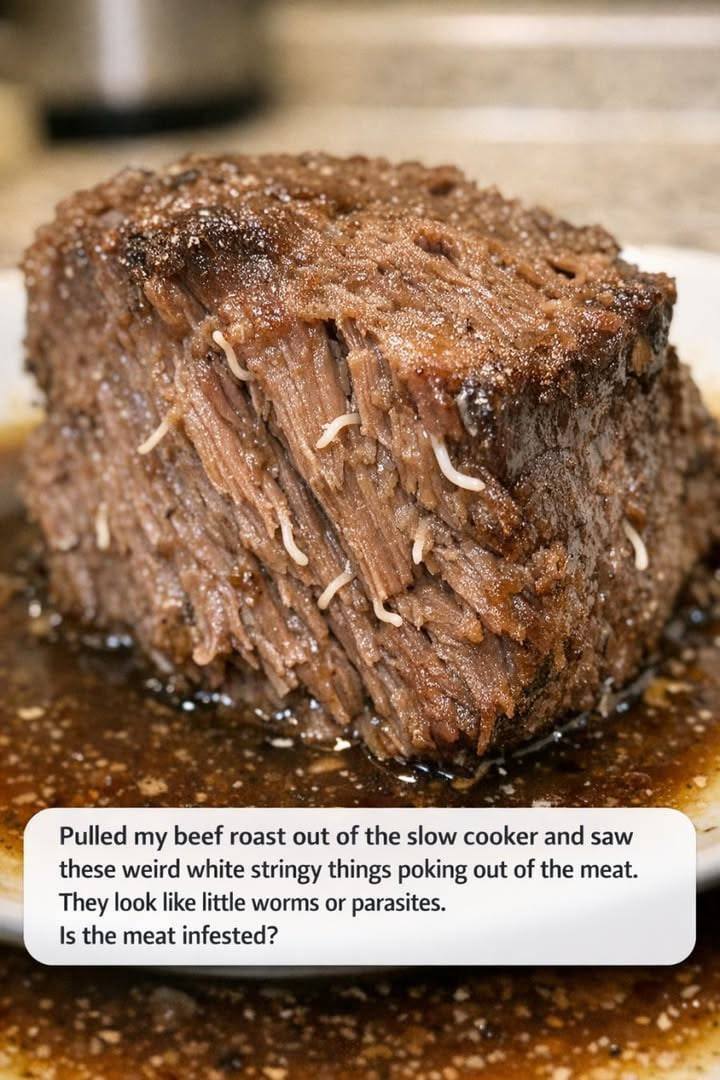
White Stringy Strands in Slow-Cooked Beef
If you notice white stringy strands in slow-cooked beef, it’s usually normal and safe. Those strands are typically connective tissue (collagen or elastin) that becomes visible when meat cooks for a long time.
🥩 What those strands actually are
-
Collagen / connective tissue
-
Found in tougher cuts like chuck, brisket, or shank.
-
During slow cooking it breaks down into gelatin, but some pieces remain as soft white strands.
-
-
Tendon or silverskin
-
Tough connective tissue that doesn’t fully dissolve.
-
Appears as thin white strings or ribbons in the meat.
-
-
Fat fibers
-
Sometimes melted fat leaves thin white threads mixed with shredded beef.
-
🔎 How to tell it’s normal
Normal connective tissue usually:
-
Looks white or slightly translucent
-
Feels soft or chewy
-
Appears attached to meat fibers
-
Shows up mostly in slow-cooked or shredded beef
⚠️ When it might be a problem
Rarely, it could indicate spoilage if you notice:
-
Strong sour or rotten smell
-
Slimy texture
-
Gray/green discoloration
-
Meat tasted very sour or bitter
If those signs appear, discard the meat.
🍲 Tip for better texture
To reduce visible strands next time:
-
Trim silverskin and tendons before cooking.
-
Use longer slow cooking so collagen melts more fully.
-
Choose cuts like chuck roast that break down better.
✅ Bottom line:
In most slow-cooked beef, white stringy strands are simply connective tissue and completely safe to eat.
If you want, you can also describe the strands (thin like hair, thick, curly, etc.) or send a photo, and I can help confirm exactly what they are.
