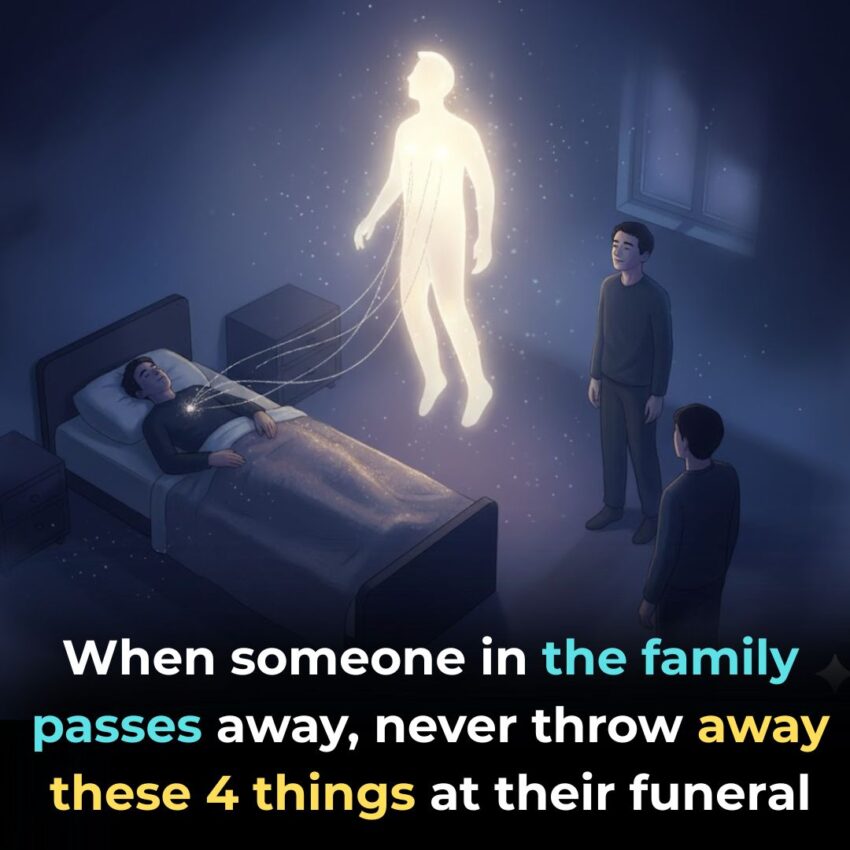
You’re likely referring to traditional or cultural beliefs about what not to throw away when a family member passes away. Many cultures have specific customs and superstitions surrounding death, meant to honor the deceased, preserve memories, or avoid bad luck.
Here’s a detailed look:
🕊️ Common Beliefs Across Cultures
1️⃣ Never Throw Away Clothing or Personal Items of the Deceased
- Many traditions say clothing, jewelry, or personal items should not be thrown away immediately.
- Instead:
- Keep them in a safe place
- Donate thoughtfully after a period of mourning
- Use them in rituals or memory boxes
Why: These items are believed to carry the energy or memory of the loved one. Discarding too quickly may be considered disrespectful or bring emotional discomfort.
2️⃣ Never Throw Away Ashes, Funeral Offerings, or Sacred Items
- In cultures that practice cremation: ashes are often kept in urns or scattered in meaningful places.
- Ritual items like prayers, candles, or incense should not be discarded casually.
3️⃣ Never Throw Away Memorial Objects
- Photos, letters, or gifts received from the deceased are often kept indefinitely, or passed on as heirlooms.
- Some traditions suggest:
- Keep a memory corner or altar
- Let items naturally fade over time rather than disposing abruptly
4️⃣ Symbolic Items
- Certain cultures have food, coins, or ritual objects used in mourning or spiritual ceremonies.
- Throwing these away is thought to invite misfortune or show disrespect.
💡 General Rule
- When in doubt, store respectfully for a period.
- Honor personal or family traditions before deciding what to discard.
If you want, I can make a practical guide for what you should and shouldn’t throw away after a family member passes, with explanations from different cultural practices—so it’s respectful and easy to follow.
Do you want me to do that?
