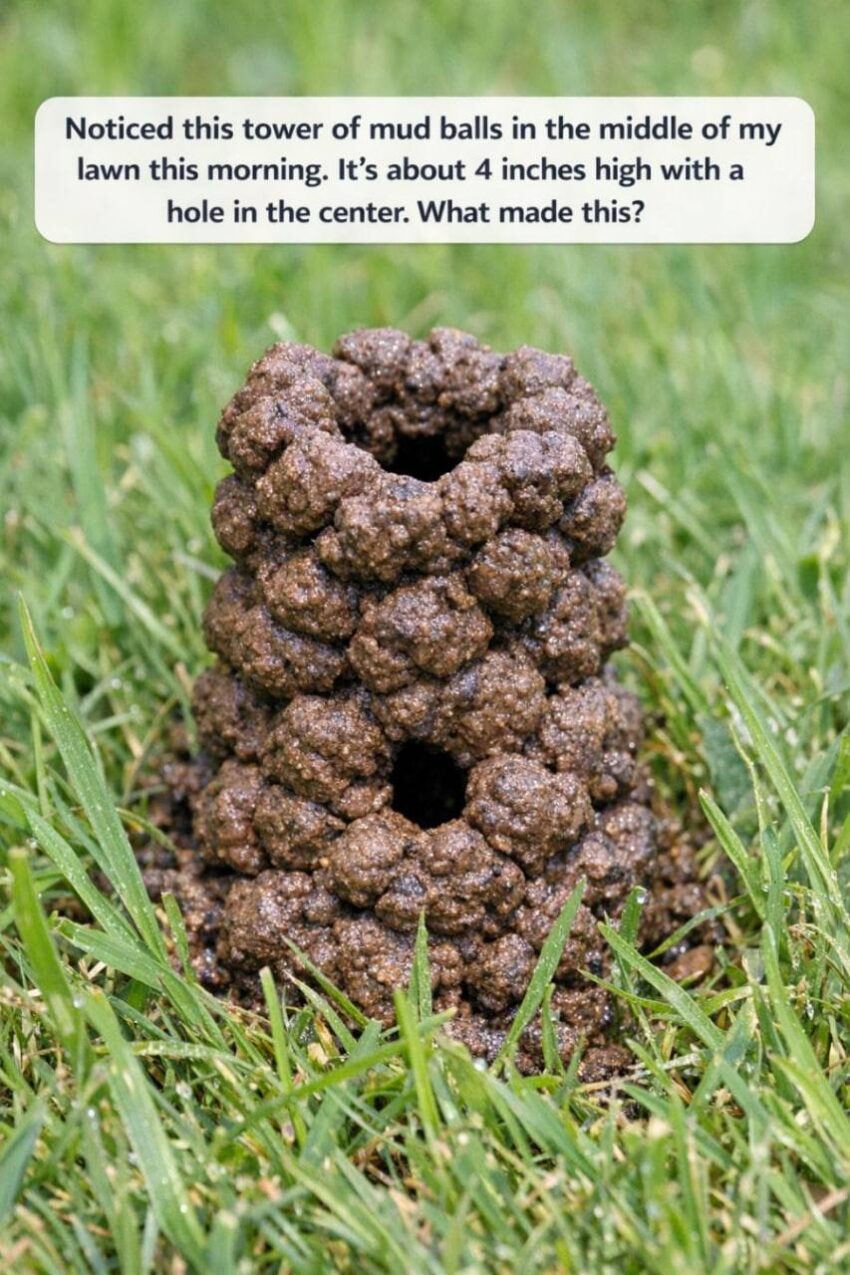
Mud balls in a lawn are usually the result of insects or small animals using mud for building purposes. The exact culprit depends on the size, shape, and distribution of the balls. Here are the most common causes:
1. Cicadas or Mud Daubers
- Mud dauber wasps: They build small mud nests (sometimes ball-shaped) to house their larvae.
- Usually attached to vertical surfaces, but occasionally stray onto lawns if nearby.
2. Spiders
- Some spider species use mud to create protective burrows or shelters.
3. Ants (Specifically Subterranean or “Mud” Ants)
- Certain ant species use mud to seal entrances to underground nests.
- These may appear as small balls scattered around the lawn.
4. Worms or Moles
- Earthworms occasionally bring small bits of soil to the surface (not usually in perfect balls).
- Moles create molehills, which are more mound-like, but rain can turn the soil into clumps resembling mud balls.
5. Frogs or Toads
- Rarely, some amphibians make small mud depressions for laying eggs; the leftover mud can appear as balls.
Tips to Identify the Culprit
- Observe timing: Mud daubers and ants are active in spring/summer.
- Check size: Mud dauber balls are usually small (pea-sized), ant mud balls are tiny (1–3 mm).
- Look for patterns: Lines or clusters may indicate ant tunnels; isolated balls may point to wasps.
- Inspect nearby structures: Wasps often build on walls, fences, or tree trunks near the lawn.
If you want, I can give a step-by-step method to figure out exactly which insect or animal made the mud balls in your lawn without disturbing them too much. That way you’ll know if it’s harmless or needs management.
Do you want me to do that?
