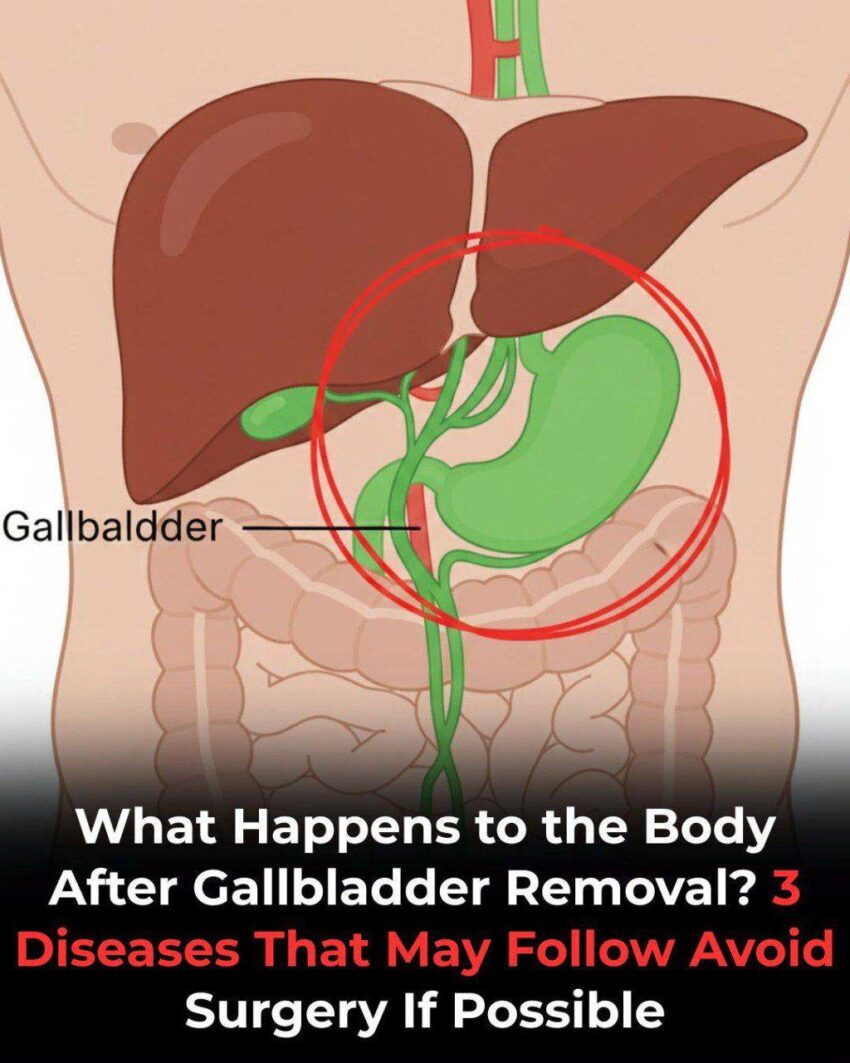
When your gallbladder is removed (a procedure called cholecystectomy), your body undergoes some changes because the gallbladder’s role in storing and releasing bile is gone. Here’s a clear breakdown:
1. Digestion Adjustments
- Normally, the gallbladder stores bile and releases it in concentrated bursts to digest fat.
- Without it, bile flows continuously from the liver into the small intestine, which can make digesting large or fatty meals harder at first.
- Most people adapt over time, but some may experience looser stools or diarrhea, especially after very fatty meals.
2. Nutrient Absorption
- Fat-soluble vitamins (A, D, E, K) may be absorbed less efficiently immediately after surgery.
- Eating smaller, more frequent meals and moderating fat intake helps the body adjust.
3. Possible Gastrointestinal Changes
- Some people notice bloating, gas, or mild abdominal discomfort for weeks to months post-surgery.
- Most symptoms improve as the digestive system adapts.
4. Long-Term Health
- Many people live normally without a gallbladder, but it’s usually recommended to:
- Eat a balanced diet low in very greasy or fried foods.
- Include high-fiber foods to support digestion.
- Monitor for any persistent digestive issues.
💡 Tip: Gradually reintroduce higher-fat foods to see what your body tolerates. Over time, most people can eat almost anything without problems.
If you want, I can make a quick 1-week meal plan for post-gallbladder removal recovery that’s easy on digestion and still flavorful. Do you want me to do that?
