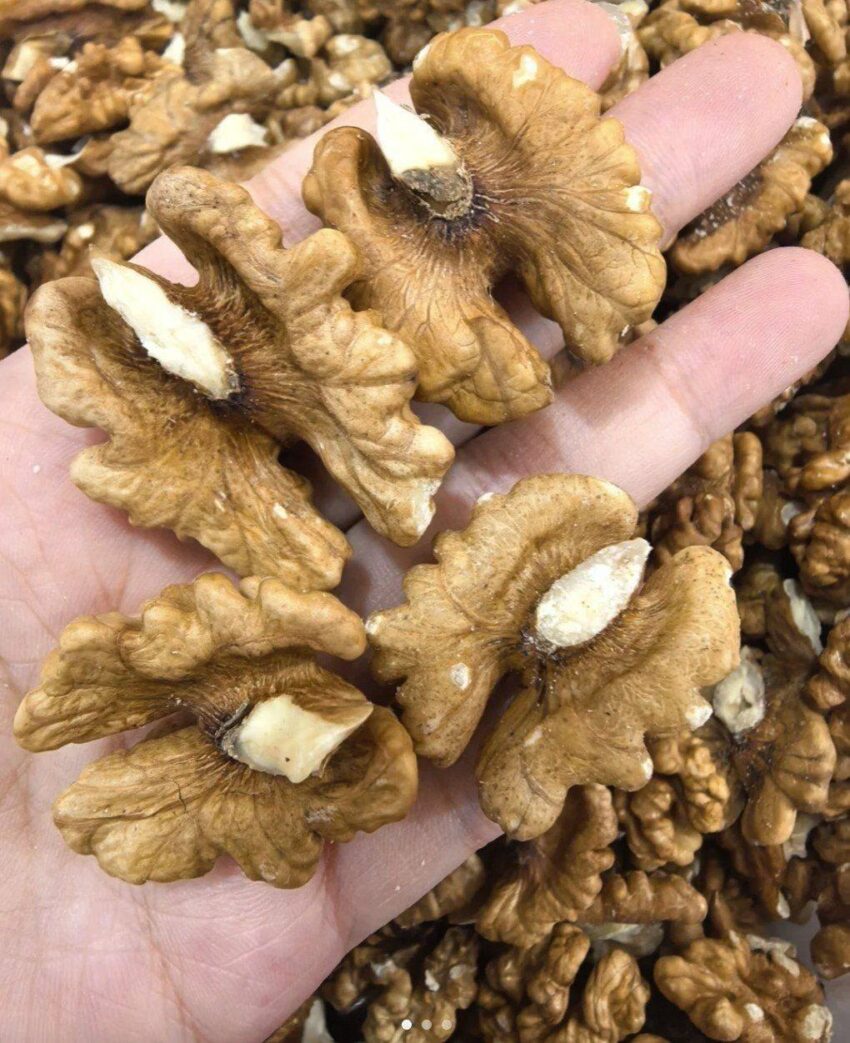
Walnuts are nutrient-dense tree nuts from the species Juglans regia, known for their distinctive brain-like shape and rich, slightly bitter flavor. They are commonly eaten raw, roasted, or added to both sweet and savory dishes.
Nutritional Benefits
- Healthy fats: High in omega-3 fatty acids, which support heart and brain health.
- Protein & Fiber: Help keep you full and support digestion.
- Micronutrients: Rich in magnesium, phosphorus, copper, and antioxidants.
- Brain & Heart Health: Studies suggest walnuts may improve cognition and reduce inflammation.
Culinary Uses
- Snacking: Eaten raw, roasted, or candied.
- Baking: Common in breads, muffins, cookies, and brownies.
- Salads & Grain Bowls: Adds crunch and flavor to savory dishes.
- Sauces & Pestos: Blended into nut sauces or mixed with herbs for pesto.
- Breakfast: Topping for oatmeal, yogurt, or smoothie bowls.
Tips
- Store in an airtight container in the fridge or freezer to prevent rancidity.
- Lightly toast to enhance flavor, but avoid burning.
- Walnut oil can be used in dressings or low-heat cooking.
If you want, I can give a simple recipe for honey-roasted walnuts that keeps them crunchy, sweet, and perfect for snacking or topping salads. Do you want me to?
