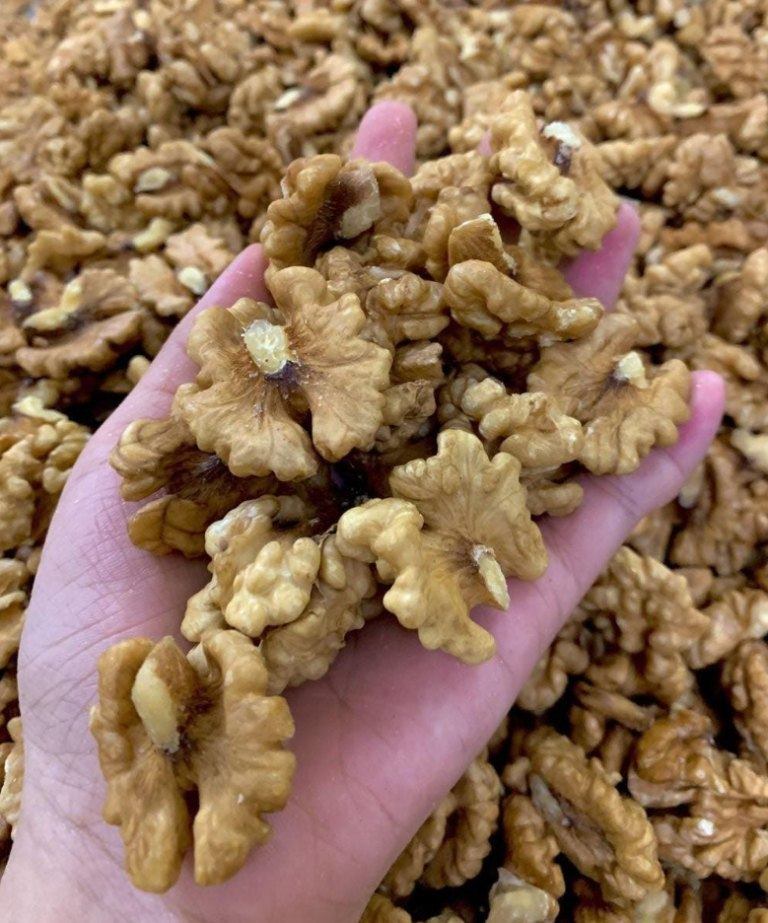
Walnut Tree 🌳
The walnut tree is a deciduous tree known for producing walnuts, a highly nutritious nut. There are several species, but the most commonly cultivated for nuts are English walnut (Juglans regia) and Black walnut (Juglans nigra).
Key Features
- Height: 10–40 meters depending on species
- Leaves: Pinnate, large, with multiple leaflets
- Flowers: Small, yellowish-green, and appear in spring
- Fruit: A round or oval nut encased in a hard shell surrounded by a green husk
Uses
- Culinary
- Walnuts are eaten raw, roasted, or used in baking, salads, and desserts.
- Walnut oil is extracted for cooking or salad dressings.
- Health Benefits
- Rich in omega-3 fatty acids, antioxidants, protein, and fiber
- Supports heart health, brain function, and anti-inflammatory properties
- Wood
- Walnut wood is prized for furniture, flooring, and veneers due to its durability and attractive color.
- Traditional Medicine
- Leaves, bark, and nuts have been used in some traditional remedies for skin conditions and digestive issues.
Growing Conditions
- Prefers well-drained, fertile soil
- Requires full sun
- Sensitive to waterlogging and extreme cold
✅ Tip: English walnut trees take about 5–7 years to produce nuts, while black walnuts may take longer.
If you want, I can also show you 5 key health benefits of eating walnuts regularly.
