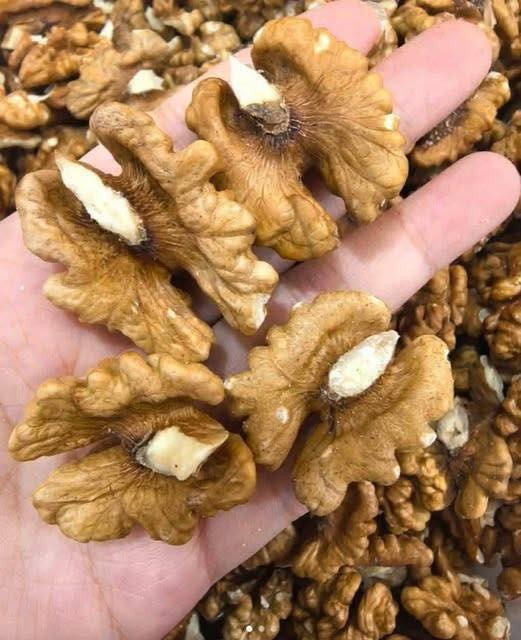
Walnut is a nut known for its rich flavor, crunchy texture, and health benefits. 🥜 It’s one of the oldest cultivated nuts, native to regions of Europe and Asia, and is a staple in many cuisines around the world.
Key Features
- Shape: Round with a hard shell (most commonly consumed as shelled nuts)
- Color: Brownish with a wrinkled appearance
- Taste: Rich, slightly bitter with a creamy texture
- Size: Small, with two halves inside the shell
- Varieties: The English walnut (also known as Persian walnut) is the most commonly consumed variety.
Nutritional Benefits (per 1 oz / 28g serving)
- Calories: ~185 kcal
- Fat: ~18g (mostly healthy unsaturated fats)
- Protein: ~4g
- Fiber: ~2g
- Vitamins & minerals: Rich in vitamin E, magnesium, copper, manganese, and antioxidants.
- Omega-3s: Walnuts are a great source of alpha-linolenic acid (ALA), a plant-based omega-3 fatty acid that’s good for heart health.
Health Benefits
- Heart Health: The healthy fats in walnuts, especially omega-3s, can help reduce inflammation and lower cholesterol, benefiting heart health.
- Brain Health: Walnuts contain compounds that may boost brain function and improve cognitive abilities.
- Antioxidant-rich: Walnuts have high levels of antioxidants, which help fight oxidative stress and support overall health.
- Weight management: They can help with weight control, as their fiber and protein content promote satiety.
Common Ways to Eat Walnuts
- As a snack: Eat them raw, roasted, or spiced for a healthy snack.
- In baking: Add to cookies, cakes, muffins, or brownies.
- In salads: Add chopped walnuts for a crunchy texture in mixed greens or fruit salads.
- In smoothies: Blend them into smoothies for extra creaminess and nutrients.
- In savory dishes: Use crushed walnuts as a topping for roasted vegetables, pasta, or as a coating for meat.
Storage Tips
- Shelled walnuts should be kept in an airtight container in the refrigerator to prevent them from going rancid.
- Unopened walnut shells can be stored in a cool, dry place for several months.
💡 Fun Fact: Walnuts are historically significant; they were considered a sacred food in ancient Rome and were even used as currency in some cultures.
If you want, I can also show you:
- How to make walnut butter
- How to roast walnuts for maximum flavor
- Creative ways to incorporate walnuts into everyday meals.
