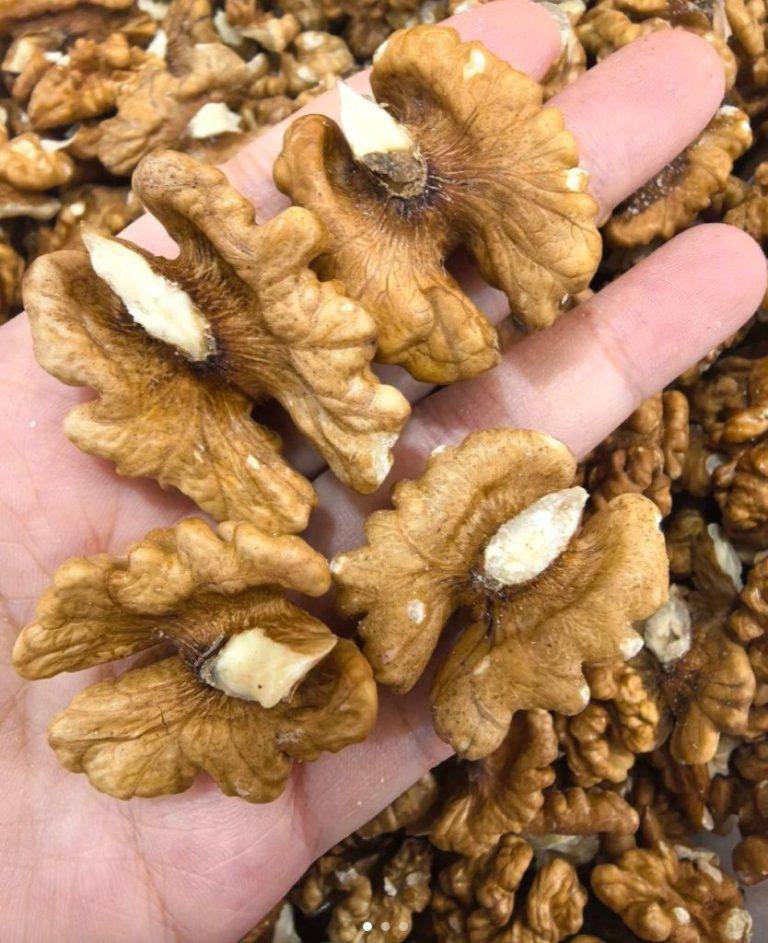
Walnut refers to a group of large deciduous trees known for their edible nuts and valuable hardwood. Walnuts are cultivated worldwide for both culinary and timber uses.
Key Characteristics:
- Leaves: Pinnate (feather-like) with multiple leaflets.
- Flowers: Monoecious—male catkins and female flowers appear on the same tree.
- Fruit: The walnut we eat is a seed encased in a hard shell, surrounded by a green husk when growing.
- Wood: Dark, dense, and durable; used for furniture, veneers, and gunstocks.
Common Types:
- English Walnut – Most widely cultivated for nuts; native to Central Asia.
- Black Walnut – Known for dark, high-quality wood; nuts have a stronger flavor.
Uses:
- Culinary: Eaten raw, roasted, or used in baked goods, salads, and sauces.
- Oil: Walnut oil is used in cooking and cosmetics.
- Timber: Valued for fine furniture and decorative woodworking.
Walnut trees also improve soil fertility through a process called allelopathy, where compounds from leaves or husks can inhibit nearby plant growth—something to consider in garden planning.
If you want, I can make a diagram showing walnut tree structure, nut anatomy, and leaf pattern to make it easier to identify. Do you want me to do that?
