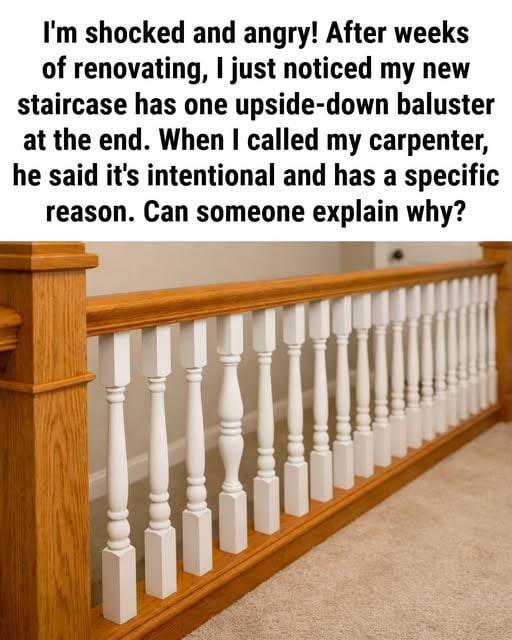
An upside-down baluster refers to a railing or staircase post (baluster) that has been installed in reverse, meaning the decorative or tapered end that normally goes upward toward the handrail is facing downward toward the base or floor.
What It Is
- Balusters are the vertical posts that support a handrail on stairs or balconies.
- Many balusters are tapered, carved, or decorative, designed to have a top (near handrail) and bottom (near tread or floor).
- Installing a baluster upside-down reverses the intended orientation, which can look odd and sometimes compromise stability if the design relies on the taper for proper fit.
How to Spot an Upside-Down Baluster
- Wider end at the top: Normally, the decorative or wide end should connect to the handrail.
- Narrow end at the floor: The narrow end usually rests on the stair tread or base plate.
- Pattern mismatch: If the balusters have carved patterns, an upside-down one will appear “flipped” or misaligned compared to others.
Consequences
- Aesthetic: Looks visually inconsistent or “off.”
- Structural: Some balusters are designed to bear load in a certain orientation; flipping them may slightly reduce strength or fit.
- Installation Issues: Handrail or base plate may not sit flush.
💡 Tip: Always check manufacturer diagrams before installation, especially with decorative or tapered balusters. If already installed upside-down, it’s usually simple to correct by unscrewing and flipping it.
If you want, I can make a diagram showing a correct vs. upside-down baluster with labels for top, bottom, and decorative features—it makes spotting mistakes really easy.
Do you want me to make that diagram?
