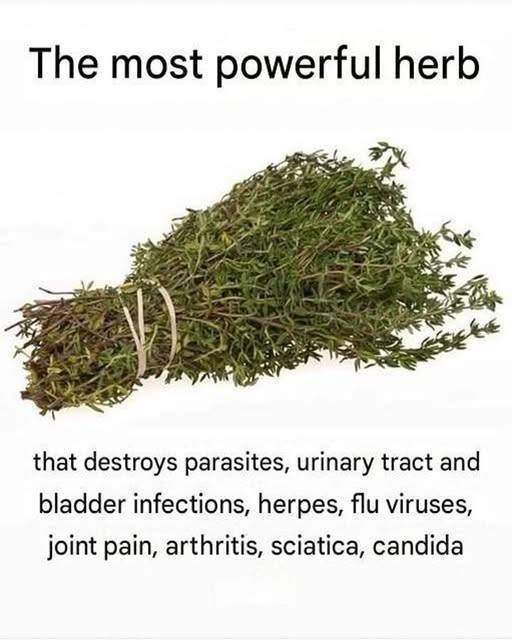
Thyme is a fragrant herb commonly used in cooking and medicine. It has small green leaves and a strong, earthy flavor that enhances soups, stews, meats, and vegetable dishes. 🌿
Key Features
- Flavor: Earthy, slightly minty, and peppery
- Appearance: Tiny green leaves on thin woody stems
- Forms: Fresh, dried, or ground
Culinary Uses
- Soups & stews: Adds depth and aroma
- Meat & poultry: Rubs, marinades, or roasted dishes
- Vegetables & grains: Roasted vegetables, rice, or pasta
- Herb blends: Often used in bouquet garni and Italian seasoning
Nutritional & Health Benefits
- Contains antioxidants and vitamins A & C
- Has antimicrobial properties
- Traditionally used for digestion and respiratory health
Tips for Using Thyme
- Fresh thyme is best added toward the end of cooking for delicate flavor.
- Dried thyme is more concentrated; use about one-third the amount of fresh.
- Can be used whole in soups or stews and removed before serving.
✅ Thyme is a versatile herb that adds subtle, aromatic flavor to many dishes while offering health benefits.
I can also give you a list of 5 easy dishes that shine with thyme if you want.
