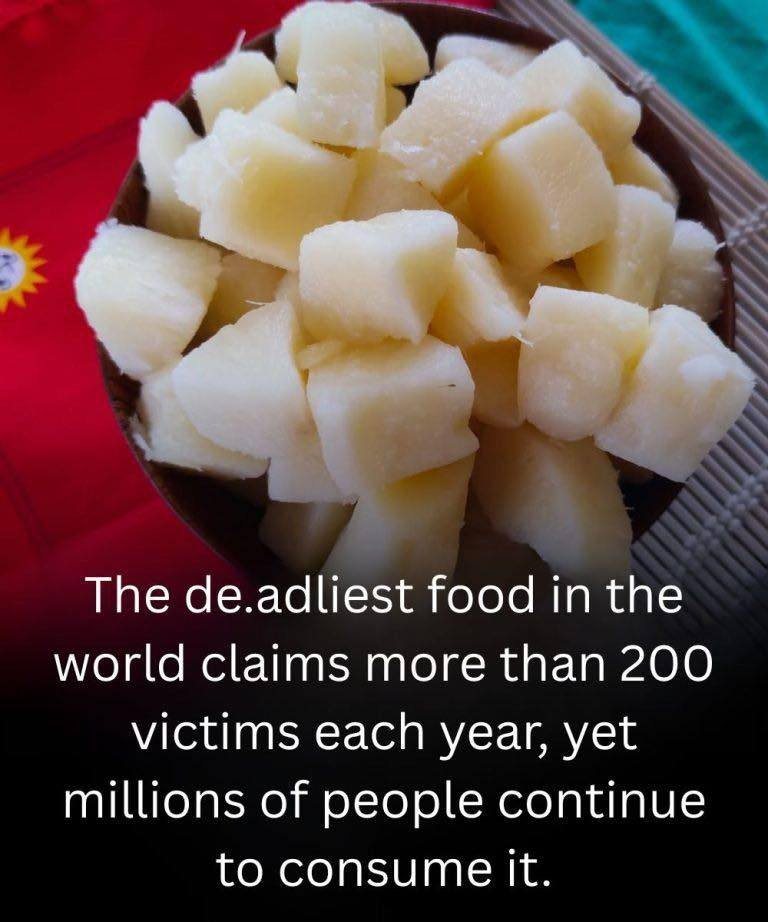
There isn’t one single “deadliest food in the world” in everyday use—but there are foods that can be extremely dangerous if prepared incorrectly. Here are some of the most well-known examples:
1. Fugu (Pufferfish)
- Contains tetrodotoxin, a powerful neurotoxin.
- Can cause paralysis and death if not properly prepared.
- In places like Japan, only licensed chefs are allowed to prepare it.
- Even tiny mistakes can be fatal.
2. Cassava (when raw or improperly processed)
- Contains cyanogenic compounds that can release cyanide.
- Proper soaking, drying, and cooking make it safe.
- A major staple in parts of Africa and South America.
3. Ackee
- National fruit of Jamaica.
- Unripe ackee contains toxins that can cause “Jamaican vomiting sickness.”
- Must be fully ripe and properly cleaned before cooking.
4. Casu marzu
- A traditional cheese from Sardinia that contains live insect larvae.
- Can cause intestinal issues if consumed improperly.
- Banned in many countries due to safety concerns.
5. Wild Mushrooms (e.g., Death Cap)
- The Amanita phalloides is responsible for many fatal mushroom poisonings worldwide.
- Looks similar to edible varieties.
- Causes severe liver failure if ingested.
Important Context
In reality, the most dangerous foods globally aren’t exotic dishes—they’re contaminated everyday foods causing foodborne illness (like improperly handled poultry, seafood, or produce).
If you’d like, I can also explain which everyday foods statistically cause the most deaths worldwide and why.
