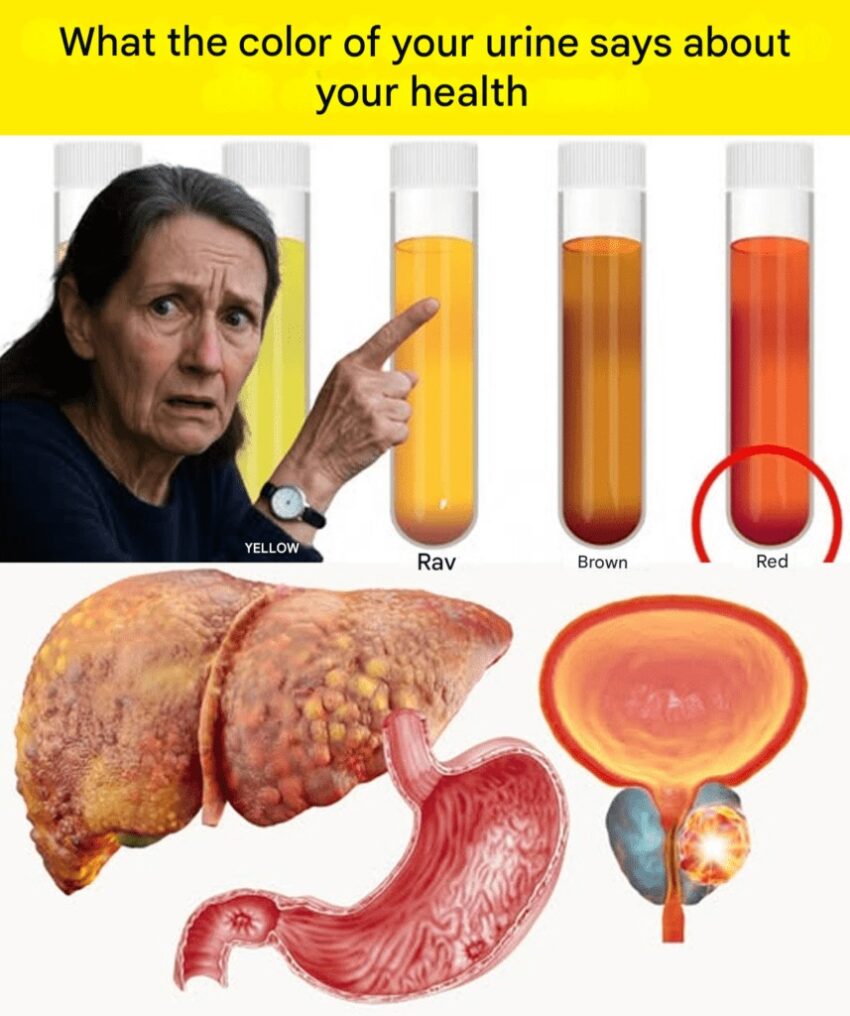
Yes! The color of your urine can give important clues about your hydration, diet, and sometimes underlying health issues. Here’s a detailed guide:
1. Pale Yellow to Light Straw
- Normal and healthy.
- Indicates proper hydration.
- Caused by urochrome, a natural pigment from breaking down hemoglobin.
2. Dark Yellow or Amber
- May suggest mild dehydration.
- Drink more water; concentrated urine often appears darker.
3. Orange
- Could be caused by dehydration, certain medications (like rifampin or some laxatives), or foods like carrots and beets.
- Sometimes indicates liver or bile duct problems if persistent.
4. Pink or Red
- Can result from beets, berries, or food coloring.
- Could also indicate blood in urine (hematuria), which requires medical attention.
5. Brown
- Could be due to certain medications, dehydration, or foods.
- Persistent brown urine may suggest liver disease (e.g., hepatitis or cirrhosis) or muscle breakdown (rhabdomyolysis).
6. Green or Blue
- Rare, often caused by medications, dyes, or infections (like Pseudomonas).
- Usually harmless but should be checked if unexplained.
7. Cloudy or Foamy
- Could indicate urinary tract infection (UTI), kidney issues, or protein in the urine.
- Persistent cloudiness warrants a doctor’s visit.
💡 Key Takeaways:
- Most color changes are harmless and linked to hydration or diet.
- Persistent, unexplained changes—especially red, brown, or cloudy urine—should prompt a medical check-up.
- Keep track of changes along with other symptoms like pain, fever, or swelling.
If you want, I can make a quick color chart guide showing what each urine color might indicate—super handy for spotting health issues early. Do you want me to do that?
