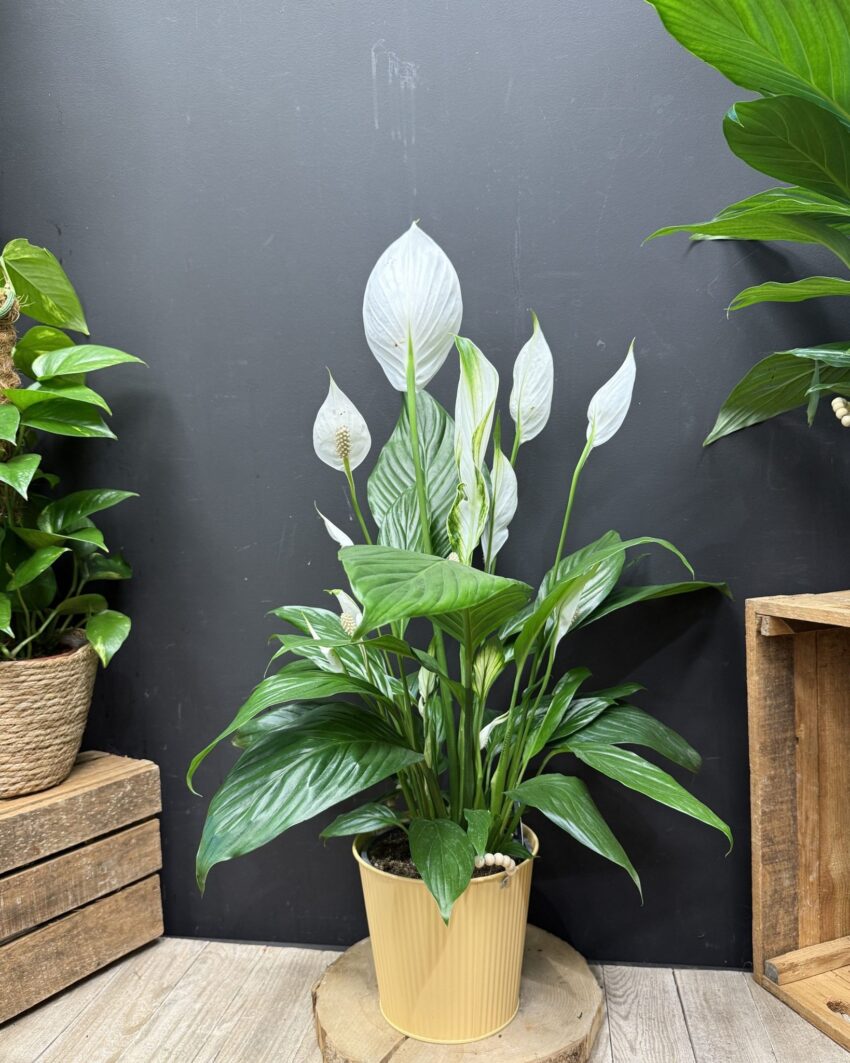
Ah, you’re asking about Spathiphyllum wallisii, commonly known as the peace lily. Here’s a detailed overview:
Basic Info
- Scientific name: Spathiphyllum wallisii
- Common name: Peace lily
- Family: Araceae
- Origin: Tropical regions of the Americas (Central and South America)
Appearance
- Leaves: Glossy, dark green, lance-shaped leaves.
- Flowers: White spathes (the petal-like part) surrounding a spadix (the true flower spike). The blooms are elegant and long-lasting.
- Size: Typically 1–4 feet tall indoors, can grow larger outdoors in tropical climates.
Care Requirements
- Light: Low to bright indirect light. Direct sunlight can scorch leaves.
- Watering: Keep soil moist but not waterlogged. Let the top inch of soil dry out between waterings.
- Humidity: Prefers high humidity; misting can help.
- Temperature: Thrives between 18–27°C (65–80°F). Protect from drafts and cold temperatures.
- Fertilizer: Feed monthly during the growing season (spring and summer) with a balanced, water-soluble fertilizer. Too much nitrogen can reduce blooming.
Blooming Tips
- Flowering requires: Adequate light, proper watering, and phosphorus-rich fertilizer.
- Bloom duration: Each spathe can last several weeks; a healthy plant may bloom multiple times a year.
Other Facts
- Air purification: Spathiphyllum wallisii is well-known for removing toxins like formaldehyde and benzene from indoor air.
- Toxicity: Mildly toxic to pets (cats and dogs) if ingested — can cause irritation and digestive upset.
If you want, I can give you a step-by-step trick to make your peace lily bloom longer and more reliably, even indoors. It’s surprisingly simple once you know the key factors. Do you want me to share that?
