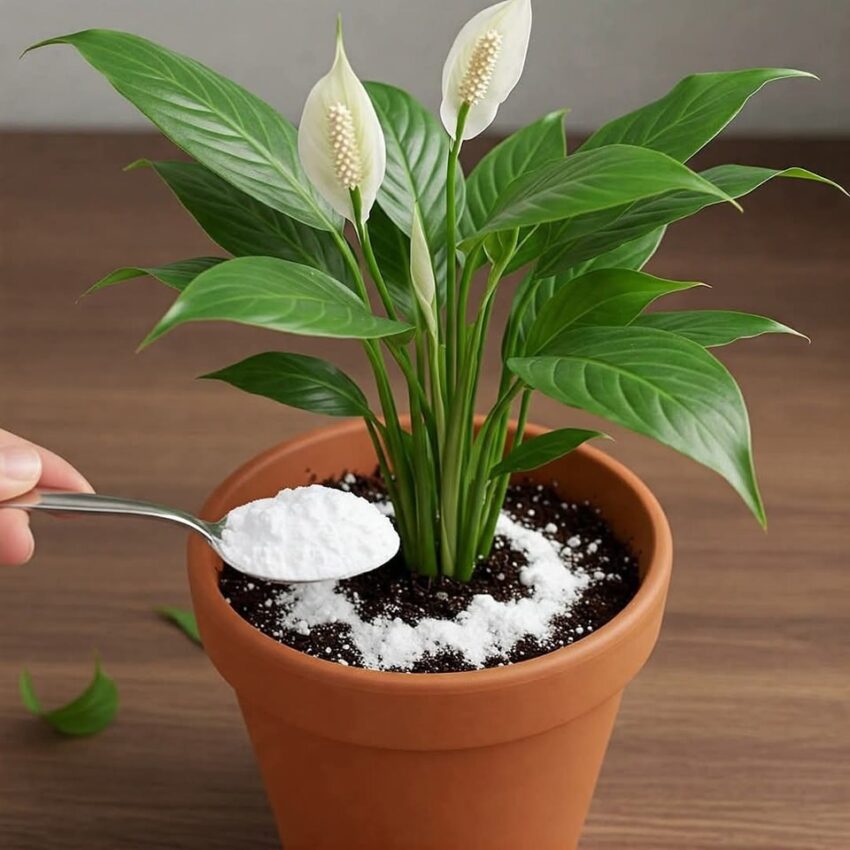
Spathiphyllum wallisii is a popular indoor houseplant commonly known as the Peace Lily. It’s loved for its elegant white flowers and its ability to thrive indoors with relatively little care. 🌿🤍
🌱 Basic Information
- Family: Araceae
- Common name: Peace Lily
- Origin: Tropical regions of Central and South America
- Growth: Compact plant with glossy dark green leaves and white “spathe” flowers
☀️ Light Requirements
- Prefers bright, indirect light.
- Can tolerate low light, but may produce fewer flowers.
- Avoid direct sunlight, which can burn the leaves.
💧 Watering
- Keep the soil slightly moist but not soggy.
- Water when the top inch of soil feels dry.
- Peace lilies will droop when thirsty, which makes it easy to know when to water.
🌡️ Temperature & Humidity
- Ideal temperature: 18–27°C (65–80°F).
- Likes moderate to high humidity, similar to tropical environments.
🌼 Flowering
- Produces white hood-like flowers (called spathes).
- Flowers can last several weeks and appear multiple times a year with good care.
🌿 Benefits
- Popular as a decorative indoor plant.
- Often associated with improving indoor air quality (though the effect in homes is limited).
⚠️ Safety
- Toxic to cats, dogs, and humans if ingested due to calcium oxalate crystals.
- Keep away from pets and small children.
✅ Care Tip:
If your peace lily stops flowering, move it to a brighter spot with indirect light and fertilize lightly once a month during the growing season.
If you’d like, I can also show you 5 common peace lily problems (yellow leaves, drooping, no flowers) and exactly how to fix them 🌿.
