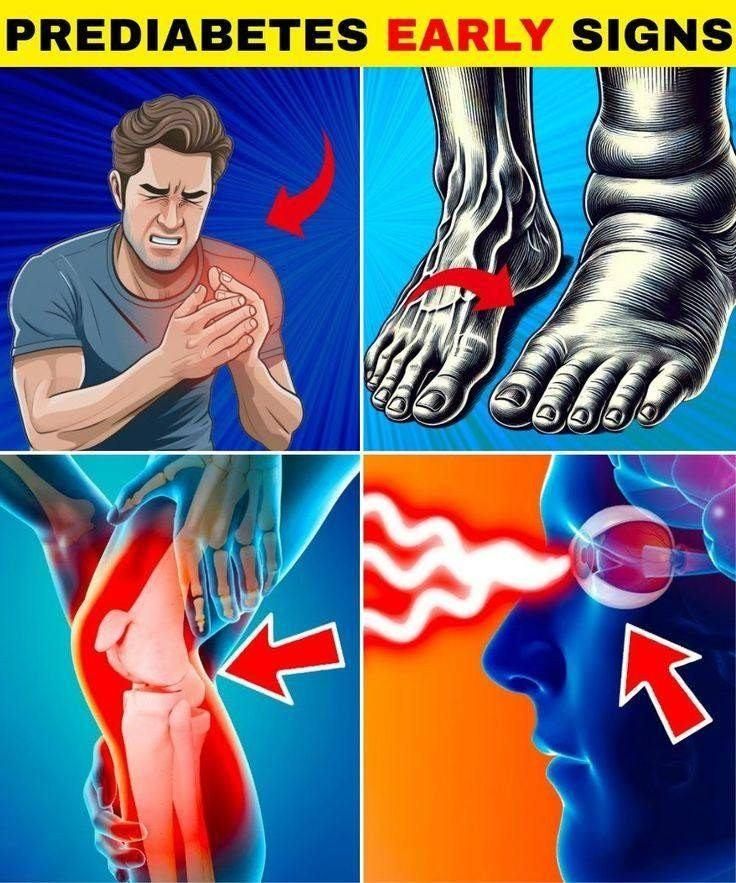
Here’s a clear breakdown of prediabetes, including how to recognize it and steps to manage or reverse it:
Signs of Prediabetes
Prediabetes often has no obvious symptoms, but some signs and risk indicators include:
- Physical signs
- Darkened patches of skin (usually on neck, armpits, or groin) – called acanthosis nigricans
- Slight weight gain, especially around the abdomen
- Fatigue or feeling tired more easily
- Health indicators
- Blood sugar levels higher than normal but not yet diabetic:
- Fasting blood glucose: 100–125 mg/dL (5.6–6.9 mmol/L)
- A1C: 5.7–6.4%
- Oral glucose tolerance test: 140–199 mg/dL (7.8–11.0 mmol/L) 2 hours after drinking glucose solution
- Blood sugar levels higher than normal but not yet diabetic:
- Risk factors
- Being overweight or obese
- Sedentary lifestyle
- Family history of diabetes
- High blood pressure or abnormal cholesterol
Control and Prevention
Even if diagnosed with prediabetes, lifestyle changes can reverse or delay progression to type 2 diabetes:
1. Healthy Eating
- Focus on whole foods: vegetables, fruits, lean proteins, and whole grains
- Limit refined carbs, sugary drinks, and processed foods
- Moderate portions and consistent meal timing
2. Physical Activity
- Aim for at least 150 minutes/week of moderate exercise (e.g., brisk walking, cycling)
- Include strength training 2–3 times/week
3. Weight Management
- Losing 5–10% of body weight can significantly improve blood sugar control
4. Regular Monitoring
- Check blood sugar levels as recommended by a doctor
- Annual A1C or fasting glucose tests
5. Medical Support
- Sometimes doctors prescribe metformin for high-risk individuals
- Manage related conditions like high blood pressure and cholesterol
💡 Tip: Even small lifestyle changes—like swapping sugary drinks for water and walking 20 minutes daily—can make a big difference in preventing diabetes.
If you want, I can make a visual guide showing “prediabetes signs vs control strategies”—it’s easy to reference and share. Do you want me to do that?
