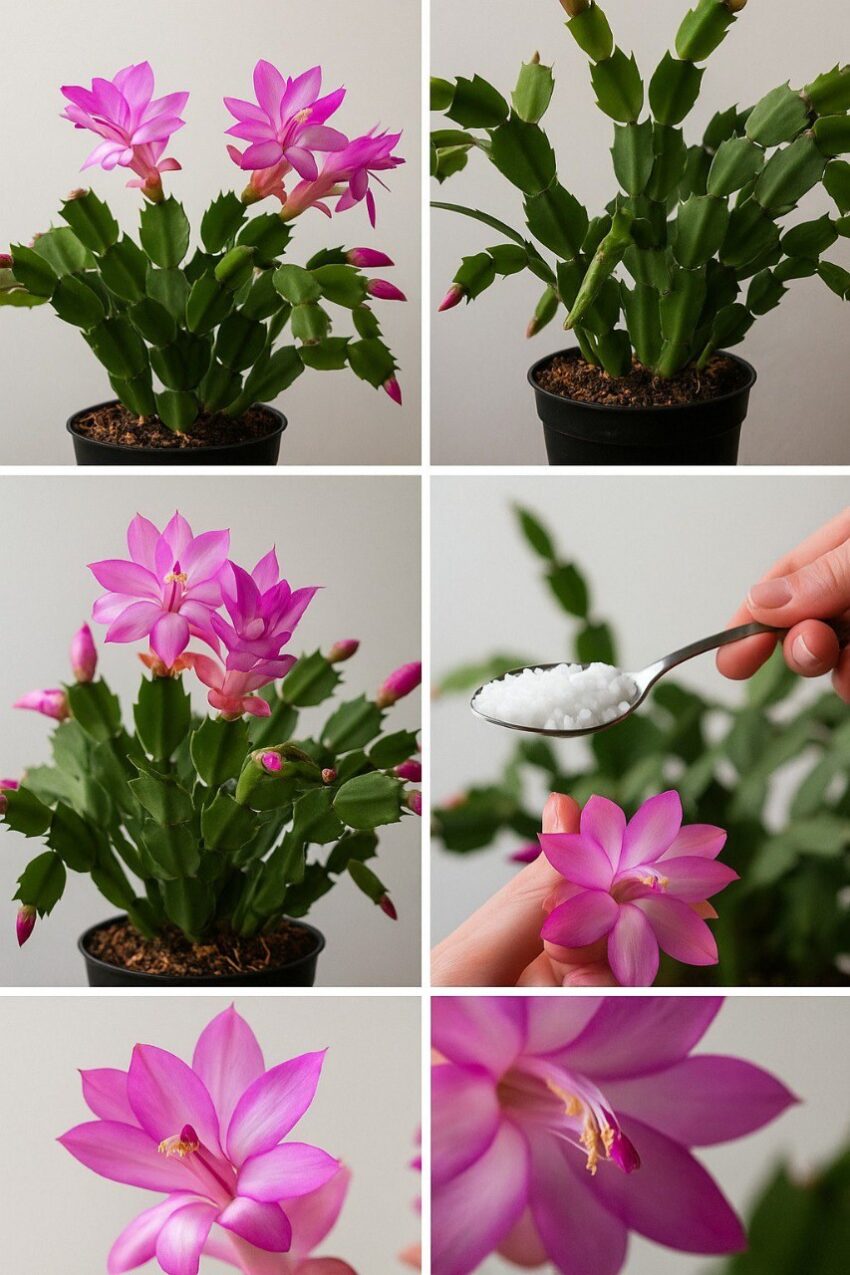
Schlumbergera truncata, commonly known as the Christmas cactus, is a popular ornamental cactus known for its bright, tubular flowers that typically bloom around December in the Northern Hemisphere. Here’s a detailed overview:
1. Classification
- Kingdom: Plantae
- Order: Caryophyllales
- Family: Cactaceae
- Genus: Schlumbergera
- Species: S. truncata
2. Description
- Stems: Flattened, segmented stems with saw-toothed edges (the segments are called cladodes).
- Size: Usually 30–60 cm (12–24 in) tall in cultivation.
- Flowers: Tubular, showy, in shades of red, pink, white, or purple. Bloom in late fall to winter.
- Roots: Shallow and fibrous.
3. Habitat & Origin
- Native to Brazil, especially in the Atlantic coastal rainforests.
- Naturally grows as an epiphyte, attaching to trees or rocks.
- Prefers humid, shaded environments, unlike desert cacti.
4. Cultivation
- Light: Bright, indirect light; avoid direct harsh sun.
- Temperature: Thrives in 15–25°C (59–77°F). Sensitive to frost.
- Watering: Moderate; allow soil to dry slightly between waterings. Avoid waterlogging.
- Soil: Well-draining, slightly acidic, rich in organic matter.
- Propagation: Easily propagated from stem segments; let cut ends dry for a day before planting.
5. Flowering Tips
- Short-day stimulus: Flowering is induced by long nights and cool temperatures.
- Minimal disturbance: Avoid repotting or heavy pruning right before flowering.
- Fertilization: Low-nitrogen fertilizer during growth promotes flowers.
6. Common Issues
- Overwatering: Leads to root rot.
- Pests: Mealybugs, spider mites, and scale insects.
- Drooping segments: Caused by underwatering or low humidity.
7. Uses
- Widely grown as a houseplant for ornamental purposes.
- Popular gift plant during holiday season due to winter flowering.
If you want, I can also make a diagram showing the plant segments, flowers, and propagation method for Schlumbergera truncata—it’s very helpful for gardeners.
Do you want me to create that?
