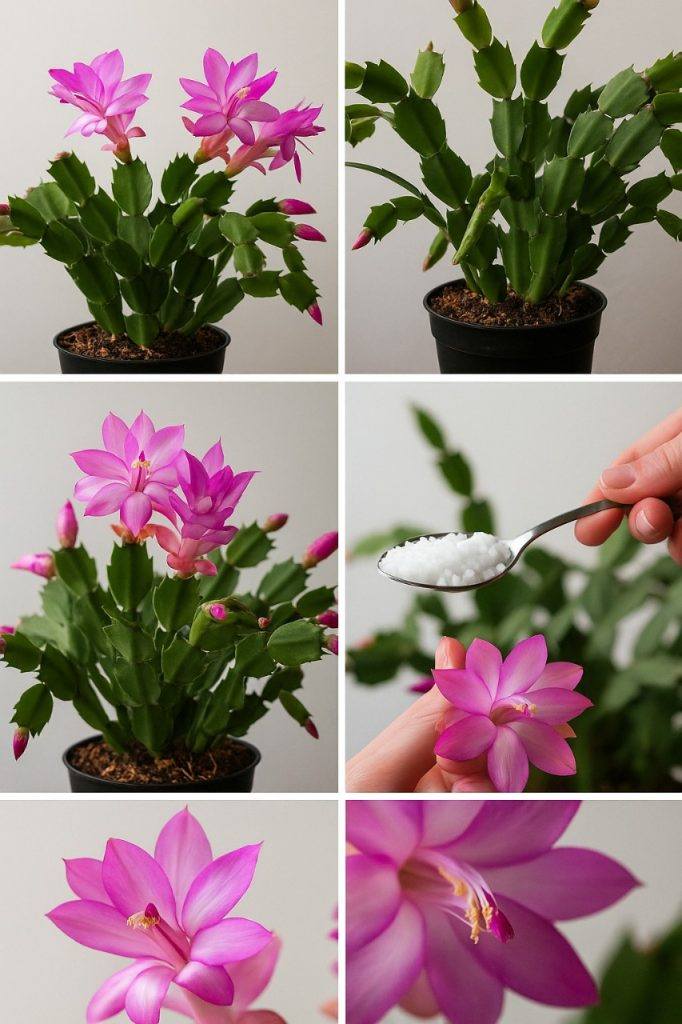
Here’s a detailed overview of Rhipsalidopsis gaertneri, a popular flowering cactus:
🌵 Rhipsalidopsis gaertneri (Easter Cactus)
1. Description
- Commonly called Easter Cactus, Whitsun Cactus, or Rhipsalidopsis.
- Belongs to the Cactaceae family, native to Brazil.
- Flat, segmented stems with slightly scalloped edges.
- Produces bright, tubular flowers in shades of red, pink, coral, or white, usually around spring or Easter, hence the common name.
2. Growth Habit
- Typically grows 12–18 inches (30–45 cm) tall and can spread similarly wide.
- Ideal as a potted indoor plant or hanging basket due to its cascading stems.
3. Care Requirements
Light:
- Prefers bright, indirect sunlight.
- Avoid direct harsh sunlight—it can burn the stems.
Watering:
- Keep soil slightly moist during flowering.
- Reduce watering after flowering and during dormancy (late spring to summer).
- Avoid overwatering—roots are prone to rot.
Temperature:
- Optimal 65–75°F (18–24°C) during growth.
- Cooler temperatures (50–55°F / 10–13°C) during rest period promote flowering.
Soil:
- Well-draining cactus or succulent mix, often amended with perlite or sand.
Fertilizer:
- Feed with cactus or blooming plant fertilizer every 2–3 weeks during active growth (spring–fall).
- Stop fertilizing during dormancy.
4. Flowering
- Blooms once a year, typically in spring.
- Bright, star-shaped flowers emerge from the edges of stem segments.
- Flowering is enhanced by cool, stable dormancy conditions for a few weeks before buds develop.
5. Propagation
- Easily propagated via stem cuttings:
- Cut a healthy segment of 2–3 stems.
- Let it callous for 1–2 days.
- Plant in moist, well-draining soil.
- Can also propagate via seed, though less common.
6. Pests & Problems
- Mealybugs or spider mites can infest stems.
- Overwatering leads to root rot.
- Drooping or pale stems may indicate too much sun or nutrient deficiency.
✅ Summary:
Rhipsalidopsis gaertneri is a vibrant, spring-flowering cactus perfect for indoor containers or hanging baskets. It requires bright indirect light, well-draining soil, careful watering, and a cool dormancy period to bloom reliably each year.
If you want, I can make a step-by-step care guide to get your Rhipsalidopsis gaertneri to bloom indoors with exact watering, light, and fertilizing schedule. Do you want me to do that?
