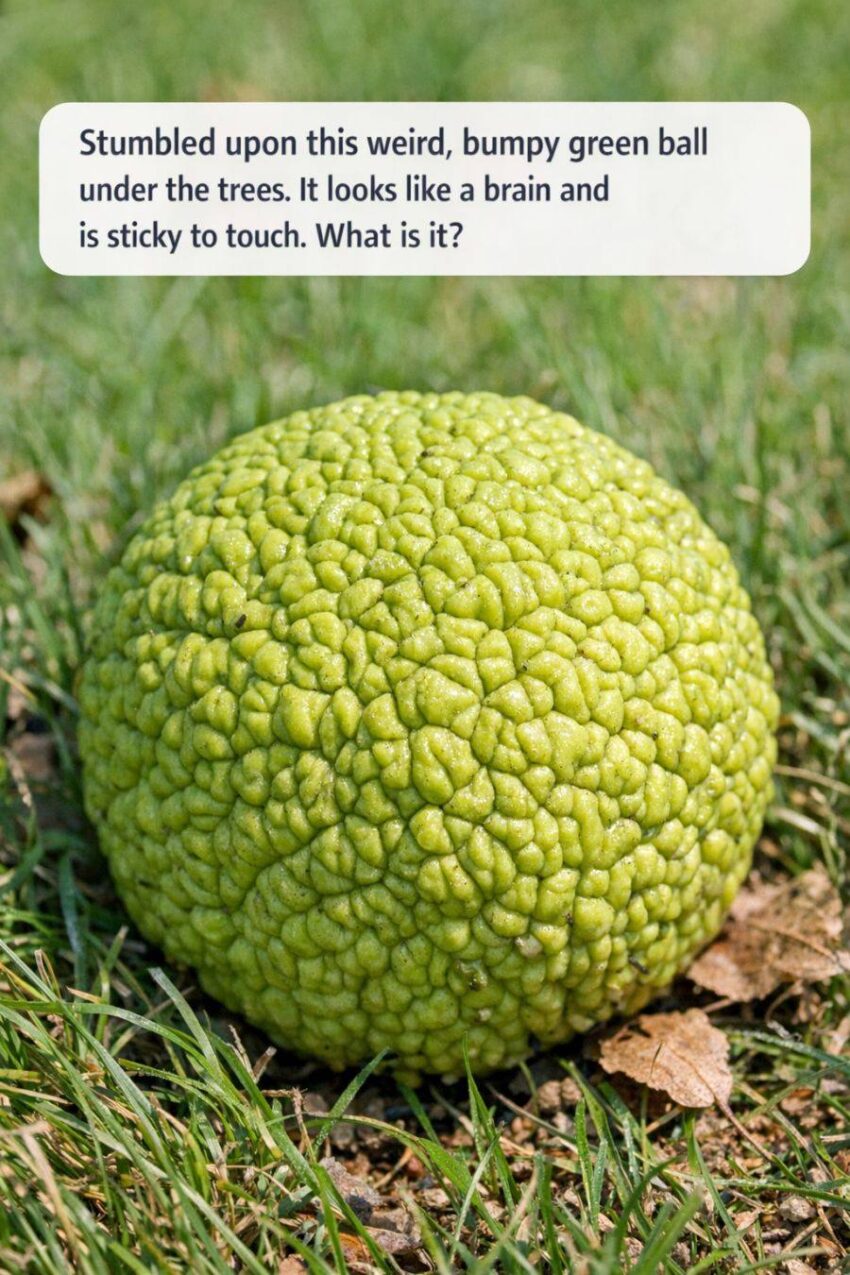
Osage orange is a tree native to the south-central United States, scientifically known as Maclura pomifera. 🌳 It’s notable for its large, green, bumpy fruit and dense wood. Despite the name, the fruit is not related to oranges and is generally not eaten by humans.
Key Features
- Fruit: Round, roughly the size of a softball, bright green, and textured
- Leaves: Glossy, dark green, deciduous leaves
- Height: Can grow 30–50 feet tall
- Wood: Extremely hard and rot-resistant; historically used for fences, bows, and tools
Common Uses
- Hedges & windbreaks: Originally planted as living fences before barbed wire
- Woodworking: Dense wood is prized for bows, fence posts, and carving
- Ornamental: Sometimes planted for shade or aesthetic appeal
- Natural insect deterrent: Some people place the fruit indoors, though scientific evidence of pest control is limited
Fun Facts
- The name “Osage” comes from the Osage Nation, Native Americans who lived in the tree’s native region.
- The fruit contains latex-like sap and is generally inedible for humans, though wildlife such as squirrels may gnaw on it.
- The wood is often compared to hickory for its strength and elasticity.
💡 Tip: If you want to plant Osage orange, it thrives in well-drained soil and full sun, and it’s extremely drought-tolerant once established.
I can also provide a guide on using Osage orange wood for crafts and woodworking projects if you want.
