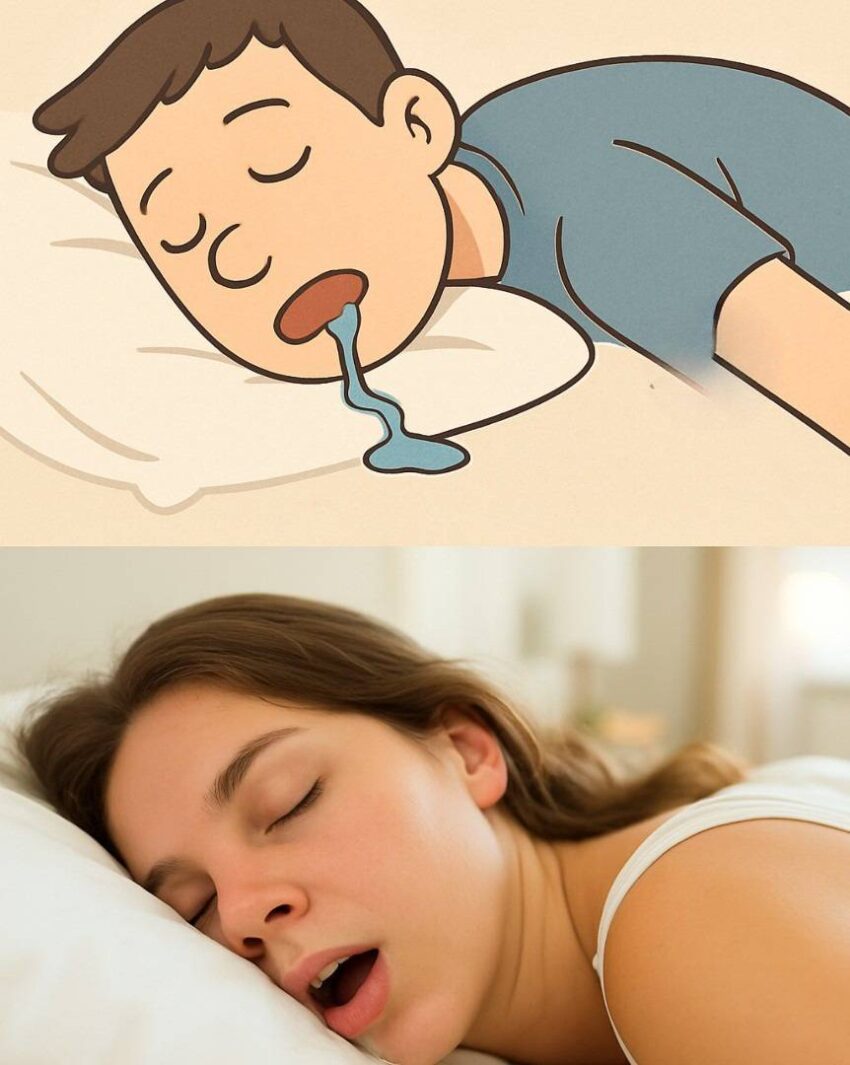
Drooling during sleep (called nocturnal sialorrhea) is common and often harmless — especially if you sleep on your side. But frequent or excessive drooling can sometimes signal an underlying condition.
Here are 6 medical conditions that are commonly associated with persistent drooling:
1️⃣ Gastroesophageal reflux disease
Acid reflux can stimulate excess saliva production (a reflex called water brash).
Other signs:
- Heartburn
- Sour taste in mouth
- Chronic cough
- Hoarseness
2️⃣ Parkinson’s disease
Drooling in this condition is usually due to reduced swallowing frequency, not overproduction of saliva.
Other signs:
- Tremors
- Muscle stiffness
- Slow movement
- Mask-like facial expression
3️⃣ Sleep apnea
Especially obstructive sleep apnea (OSA). Mouth breathing during sleep can cause drooling.
Other signs:
- Loud snoring
- Gasping during sleep
- Daytime fatigue
- Morning headaches
4️⃣ Stroke
A past or recent stroke can weaken facial muscles or affect swallowing.
Other signs:
- Facial droop
- Slurred speech
- Weakness on one side of the body
- Sudden confusion
⚠️ Sudden drooling with these symptoms is a medical emergency.
5️⃣ Cerebral palsy
More common in children or individuals with motor control difficulties.
Drooling results from impaired muscle coordination.
6️⃣ Sinus infection
Nasal congestion forces mouth breathing, which can increase drooling.
Other signs:
- Facial pressure
- Thick nasal discharge
- Reduced smell
- Headache
When Is Drooling Not Serious?
It’s often harmless if:
- You sleep on your side or stomach
- You have temporary nasal congestion
- It happens occasionally
When to See a Doctor
Seek medical advice if:
- Drooling is new or worsening
- You have difficulty swallowing
- There are neurological symptoms
- It disrupts sleep regularly
If you’d like, tell me:
- Your age
- Any other symptoms
- Whether this is new or long-term
I can help narrow down what’s most likely.
