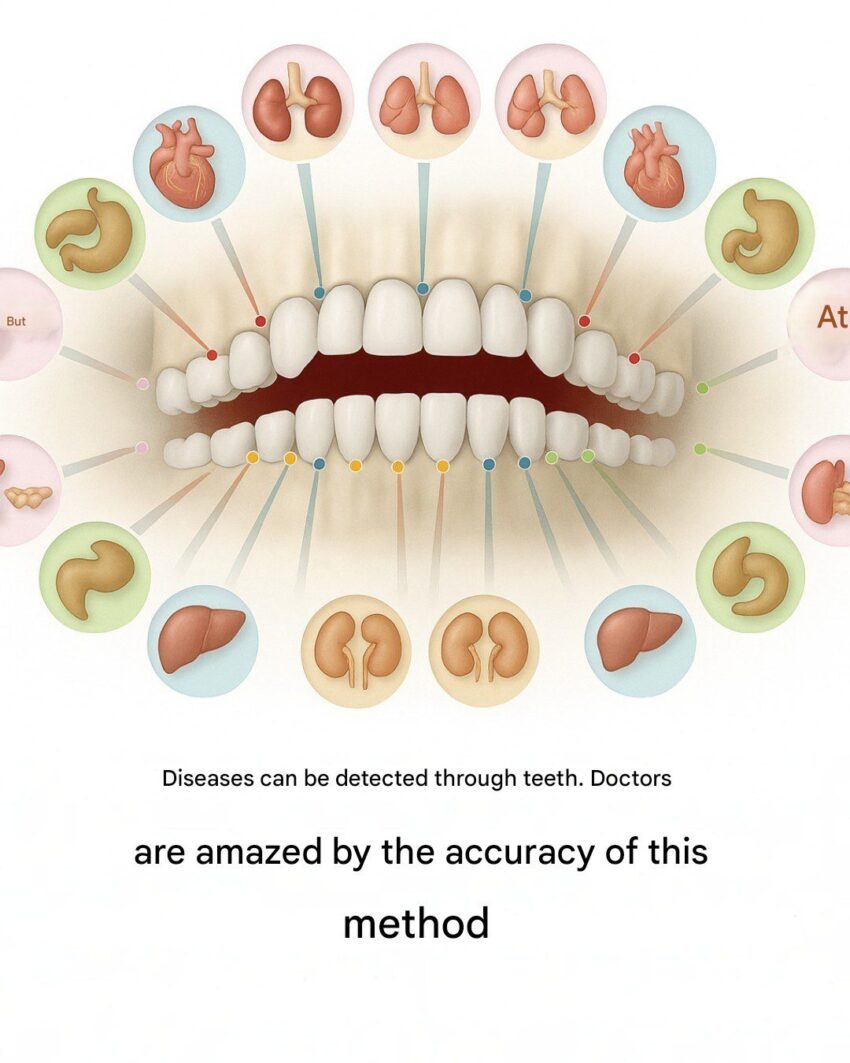
Here’s a detailed guide connecting human teeth to different organs, a concept often discussed in traditional Chinese medicine (TCM). While this isn’t widely recognized in Western medicine, it’s an interesting perspective on how oral health can reflect internal health:
1. Incisors (Front Teeth)
- Upper and Lower Front Teeth
- Associated Organs: Liver and gallbladder
- Notes: Cracks, sensitivity, or decay here may indicate digestive or liver stress according to TCM.
2. Canines (Pointed “Corner” Teeth)
- Upper and Lower Canines
- Associated Organs: Heart and stomach
- Notes: Canines are linked to emotional stress and cardiovascular health. Pain or problems may reflect tension or digestive imbalance.
3. Premolars (Between Canines and Molars)
- Upper and Lower Premolars
- Associated Organs: Lungs and kidneys
- Notes: Issues here may correspond to respiratory problems or kidney stress.
4. Molars (Back Teeth)
- Upper and Lower Molars
- Associated Organs: Stomach and intestines
- Notes: Molars help grind food; problems may signal digestive disorders or nutrient absorption issues.
5. Wisdom Teeth
- Upper and Lower Third Molars
- Associated Organs: Not strongly linked in TCM but can indicate general toxins or late-onset stress if problematic.
Why This Connection Matters
- Oral health reflects overall health: Gum disease, tooth decay, and jaw pain can signal systemic inflammation, vitamin deficiencies, or chronic conditions.
- Holistic approach: Maintaining dental hygiene and monitoring unusual changes in teeth may help catch early signs of broader health issues.
💡 Tip: Even if you don’t follow TCM strictly, dentists and doctors agree: regular dental checkups, good brushing/flossing, and monitoring for unusual tooth changes are essential for overall health.
If you want, I can make a visual chart mapping each tooth to its associated organ, so it’s easy to see the full connection at a glance. Do you want me to do that?
