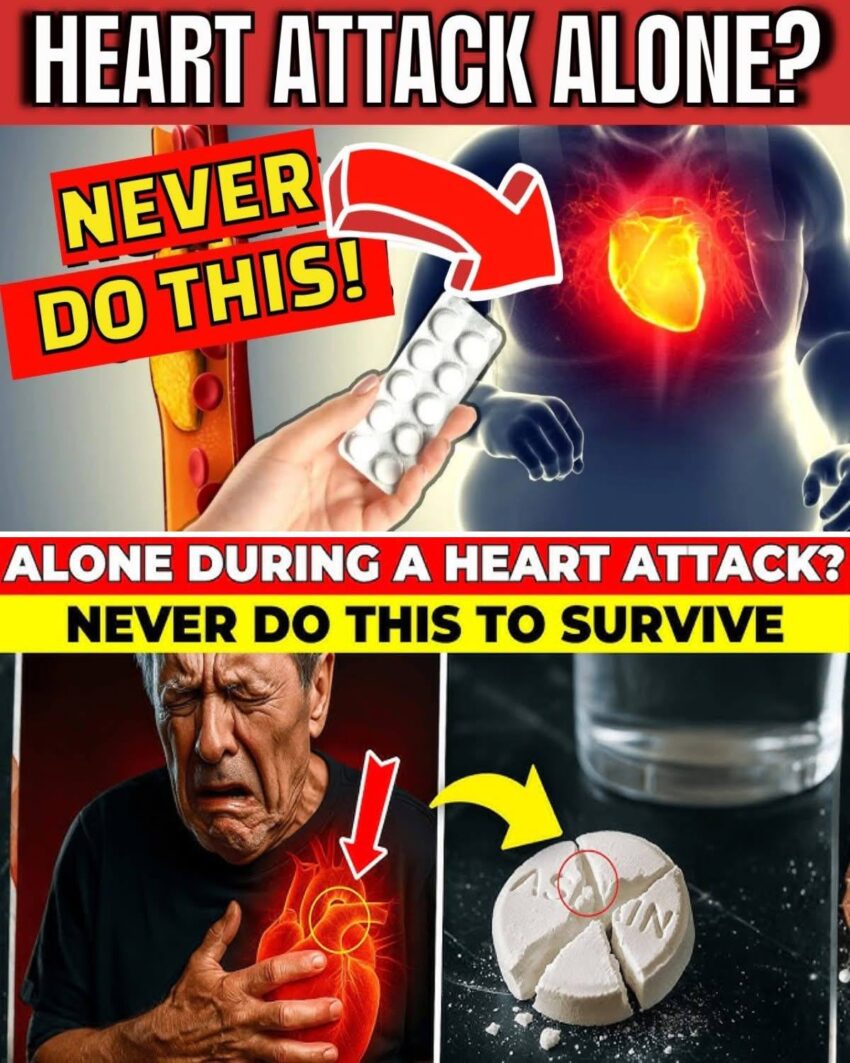
Here’s a clear and practical guide on how to survive a heart attack when you’re alone, based on medical recommendations. Acting quickly can save your life.
🫀 5 Steps to Survive a Heart Attack Alone
1. Recognize the Symptoms Immediately
Common heart attack warning signs include:
- Chest pain or tightness, often spreading to arm, jaw, neck, or back
- Shortness of breath
- Nausea or vomiting
- Cold sweat, dizziness, or lightheadedness
- Unusual fatigue
Women, older adults, and people with diabetes may experience atypical symptoms, such as jaw pain, stomach discomfort, or extreme fatigue.
2. Call Emergency Services Immediately
- Dial your local emergency number (911 in the US) even if you’re unsure.
- Tell them clearly: “I think I’m having a heart attack.”
- If possible, unlock your door so help can reach you quickly.
Early intervention is critical — every minute counts.
3. Take Aspirin (if not allergic)
- Chew 1 regular-strength tablet (300 mg) of aspirin immediately, unless allergic or advised otherwise by a doctor.
- Aspirin helps thin the blood and reduce clot formation, potentially limiting heart damage.
4. Stay Calm and Sit or Lie Down Safely
- Sit in a comfortable position (semi-reclined is often best) to reduce strain on your heart.
- Try to remain calm: slow, deep breathing can help reduce panic, blood pressure spikes, and heart workload.
- Avoid exertion — do not try to walk around if you feel faint or weak.
5. Use Medication or Other Measures (if prescribed)
- If you have nitroglycerin (for known heart conditions), take it as directed.
- If you feel faint, lie down and elevate your legs slightly if possible to maintain blood flow.
- Do not drive yourself to the hospital unless absolutely necessary. Waiting for EMS is safer.
⚠️ Extra Tips
- Keep a mobile phone nearby at all times if you live alone.
- Inform friends/family if you have heart issues, so someone can check in regularly.
- Learn CPR basics — if you lose consciousness and a bystander arrives, they can help.
💡 Remember: Acting fast is the most important factor. Chewing aspirin, calling EMS immediately, and staying calm can buy precious time until professional help arrives.
If you want, I can make a quick infographic-style checklist for heart attack survival when alone, so it’s easier to remember and follow in an emergency. It’s literally lifesaving to have it handy.
Do you want me to make that checklist?
