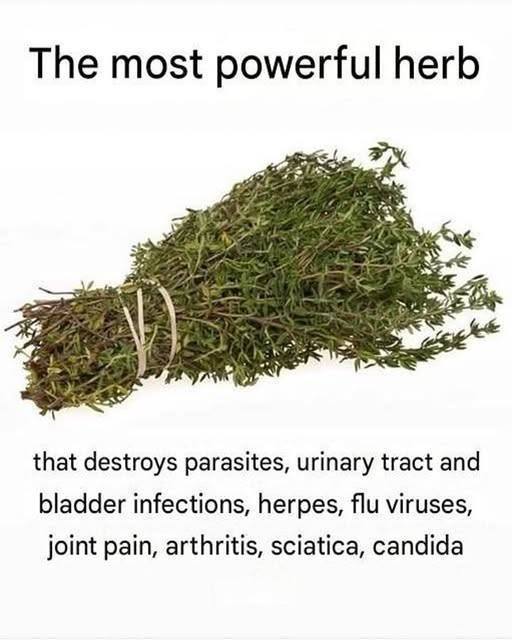
🌿 Garden Thyme
Garden thyme is a hardy, aromatic herb widely used in cooking, herbal remedies, and landscaping.
- Scientific name: Thymus vulgaris
- Family: Mint family (Lamiaceae)
- Origin: Mediterranean region
- Type: Perennial herb (comes back each year in most climates)
🌱 What It Looks Like
- Small woody stems
- Tiny gray-green leaves
- Light purple, pink, or white flowers
- Grows low and bushy (6–12 inches tall)
🍳 Culinary Uses
Garden thyme has a warm, earthy, slightly minty flavor.
Great with:
- Chicken, turkey, and beef
- Roasted vegetables
- Soups and stews
- Beans and lentils
- Tomato sauces
- Stuffing and marinades
💡 Tip: Add early in cooking—thyme holds up well to heat.
🌿 Health Benefits
Traditionally used for:
- ✅ Supporting respiratory health
- ✅ Soothing coughs and sore throats
- ✅ Aiding digestion
- ✅ Antibacterial and antifungal support
Thyme contains thymol, a natural compound known for antimicrobial properties.
🌼 How to Grow Garden Thyme
Sun: Full sun (6+ hours daily)
Soil: Well-drained, slightly sandy soil
Water: Light watering—don’t overwater
Spacing: 12–18 inches apart
Hardiness: Zones 5–9
✂️ Trim regularly to keep it bushy and prevent woodiness.
🏡 Bonus Uses
- Natural insect repellent
- Companion plant for cabbage and tomatoes
- Can be dried easily for year-round use
If you’d like, I can share:
- 🌿 A simple thyme tea recipe
- 🌿 Companion planting guide
- 🌿 How to dry and store thyme properly
- 🌿 Differences between English, lemon, and creeping thyme
Just tell me what you’d like!
