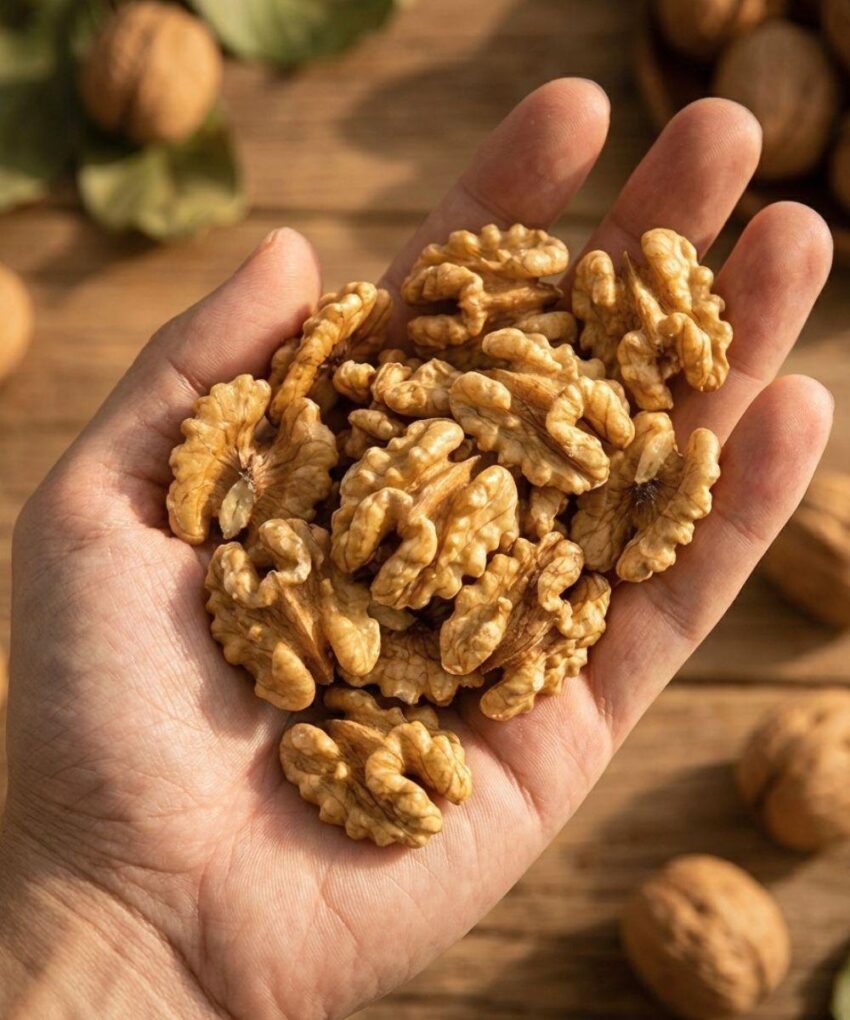
Here’s what doctors and nutrition experts say about what eating walnuts causes—including both the health benefits and possible downsides:
🧠 Positive Effects (What Eating Walnuts Causes in Your Body)
❤️ 1. Improves heart health
Walnuts are rich in healthy fats (omega-3s) and antioxidants, which can help lower LDL (“bad”) cholesterol, reduce inflammation, and support overall cardiovascular function. Regular walnut consumption has been linked to lower heart disease risk. (Cleveland Clinic)
🧠 2. May support brain function
Walnuts contain alpha-linolenic acid (ALA), polyphenols, and other nutrients that may help protect brain cells from oxidative stress and support memory and cognitive performance. (Healthline)
🩺 3. Helps balance blood sugar
Some research suggests walnuts may modestly improve blood sugar control and insulin sensitivity when eaten regularly as part of a balanced diet. (WebMD)
🦠 4. Anti-inflammatory and antioxidant effects
The polyphenols and healthy fats in walnuts reduce oxidative stress and inflammation—factors tied to heart disease and chronic illness. (WebMD)
🍎 5. Supports gut health
Walnuts act as a prebiotic, helping promote growth of beneficial gut bacteria that support digestion and overall health. (WebMD)
⚠️ Possible Negative Effects (What Eating Too Many Walnuts Can Cause)
🤧 1. Allergic reactions
Walnuts are a common tree nut allergen. In susceptible people, even small amounts can trigger reactions ranging from itching and swelling to life-threatening anaphylaxis. (Healthline)
💨 2. Digestive discomfort if overeaten
Because they’re high in fiber and fats, too many walnuts may cause gas, bloating, or loose stools in some people. (The Times of India)
⚖️ 3. Weight gain if overeaten
Walnuts are calorie-dense. A handful is nutritious, but eating large amounts without balancing calories elsewhere could lead to excess calorie intake and weight gain. (The Times of India)
🪨 4. May contribute to kidney stones in susceptible people
Walnuts contain oxalates, which in high-oxalate diets might contribute to calcium oxalate kidney stones in those prone to them. (The Times of India)
🩹 5. Can slightly interfere with mineral absorption
Walnuts have phytic acid, a plant compound that can reduce absorption of minerals like iron and zinc if eaten in very large amounts regularly. (Healthline)
💊 6. Possible interactions with medications
Because walnuts are rich in vitamin K and omega-3s, they might interact with blood thinners or other medications in sensitive individuals—so consult a doctor if you’re on medication. (The Times of India)
🥜 Summary
Eating walnuts causes many beneficial effects—like heart and brain support, gut health benefits, and lower inflammation—but too much can lead to digestive issues, allergy risks, and calorie overload. For most people, a small handful (about 1 ounce / ~7–10 walnuts) daily as part of a balanced diet is both safe and healthful. (WebMD)
If you want, I can tell you how many walnuts doctors recommend per day and the best ways to include them for maximum health benefits!
