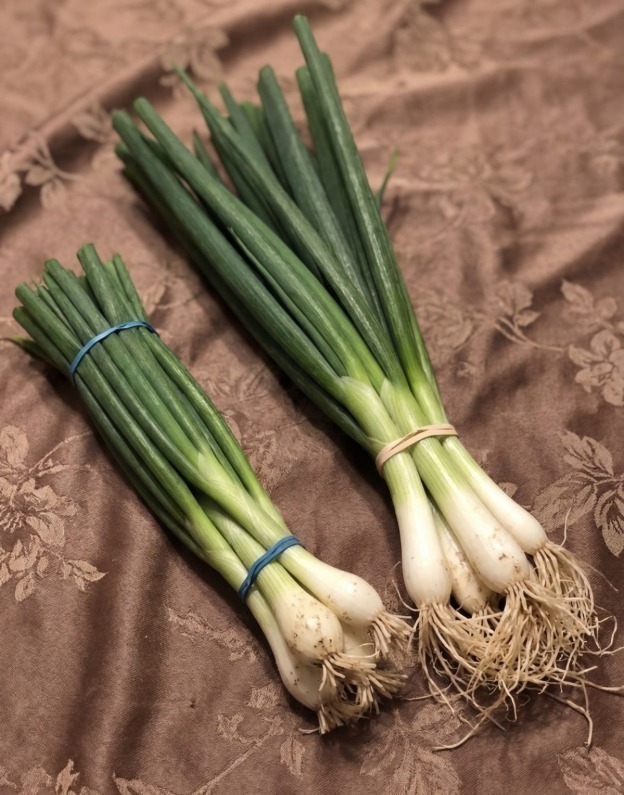
Here’s a clear breakdown of the differences between green onions, scallions, and spring onions—terms that are often confused:
1. Green Onions
- Definition: A general term for onions harvested before the bulb fully develops.
- Appearance: Long, thin white base with green tops; small or no bulb.
- Flavor: Mild, slightly sweet onion flavor; less pungent than mature onions.
- Uses: Garnishes, salads, stir-fries, soups, and sauces.
2. Scallions
- Definition: Essentially the same as green onions in most countries.
- Appearance: Long white stems with green tops; bulb barely noticeable.
- Flavor: Mild, fresh onion taste.
- Uses: Raw or cooked, in salsas, stir-fries, or as a garnish.
Key point: In everyday cooking, “green onion” and “scallion” are used interchangeably.
3. Spring Onions
- Definition: A slightly more mature onion harvested before full maturity.
- Appearance: Noticeably larger, rounder bulb at the base, green tops still attached.
- Flavor: Stronger, more pungent onion flavor than scallions.
- Uses: Can be eaten raw or cooked; great in salads, roasting, or caramelizing.
✅ Summary Table
| Feature | Green Onion / Scallion | Spring Onion |
|---|---|---|
| Bulb Size | Small or almost none | Noticeable, round |
| Flavor | Mild | Stronger, pungent |
| Use | Garnish, stir-fry, raw | Raw, roasting, cooking |
| Other Names | Scallion | Salad onion |
💡 Tip:
- If a recipe calls for scallions and you only have spring onions, you can use them—but chop finely and taste, as the stronger flavor can dominate the dish.
If you want, I can also show a quick visual guide that makes it easy to tell all three apart at a glance—it’s handy for grocery shopping or cooking. Do you want me to do that?
