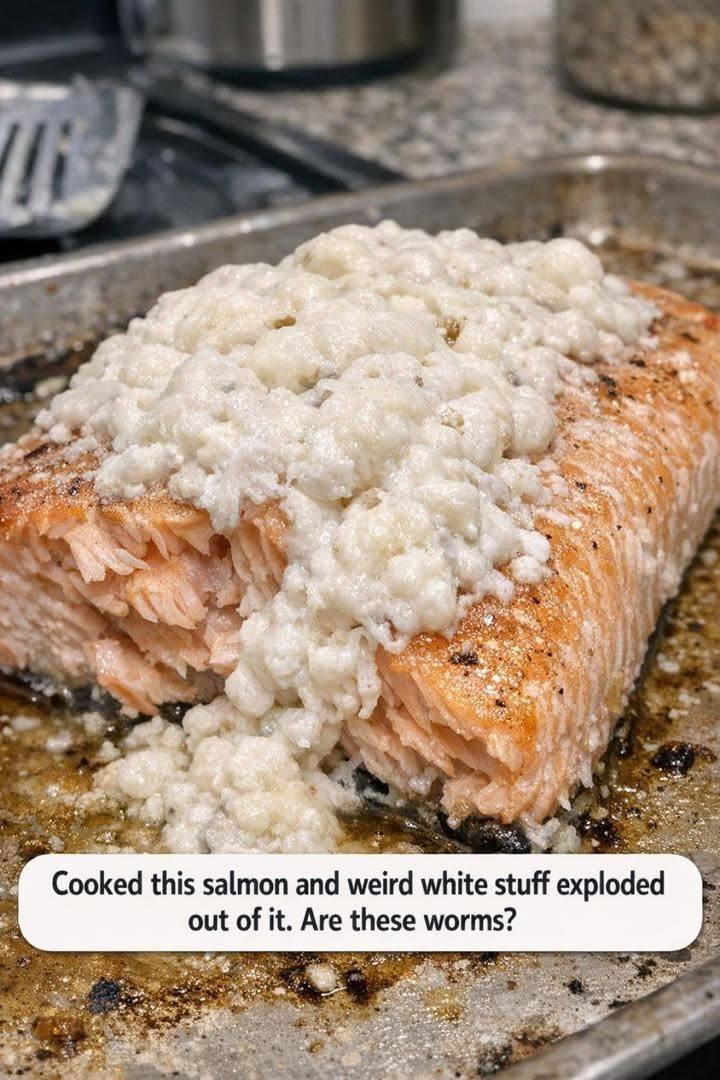
Ah! That “weird white stuff” you see on cooked salmon is completely normal and safe — it’s called albumin. Here’s the full explanation:
What Is the White Stuff?
- Albumin is a protein naturally found in salmon (and other fish).
- When salmon cooks, the heat causes the muscle fibers to contract, pushing some of the albumin to the surface.
- It appears as white, sticky, or slightly chalky blobs on the surface of the fillet.
Why It Happens
- Cooking temperature: High heat causes more albumin to appear.
- Salmon type & fat content: Thicker, fattier cuts often show more white albumin.
- Time in heat: Overcooked salmon will push out more protein.
Is It Safe to Eat?
- Yes! Albumin is just protein and is completely edible.
- Some people remove it for appearance or texture, but it’s not harmful.
Tips to Reduce Albumin
- Cook at lower temperature
- Bake, poach, or grill gently at 275–325°F (135–160°C) instead of very high heat.
- Brine before cooking
- Soak in salted water (1–2 tsp per cup) for 10–15 minutes. This can reduce albumin coagulation.
- Don’t overcook
- Cook salmon just until it flakes easily but is still moist.
💡 Quick Tip: A little albumin is a sign your salmon is moist and high-quality, so don’t worry if you see it—it’s a natural part of cooking!
If you want, I can make a diagram showing cooked salmon with albumin and how to minimize it, so it’s easier to see what’s normal versus overcooked.
Do you want me to do that?
