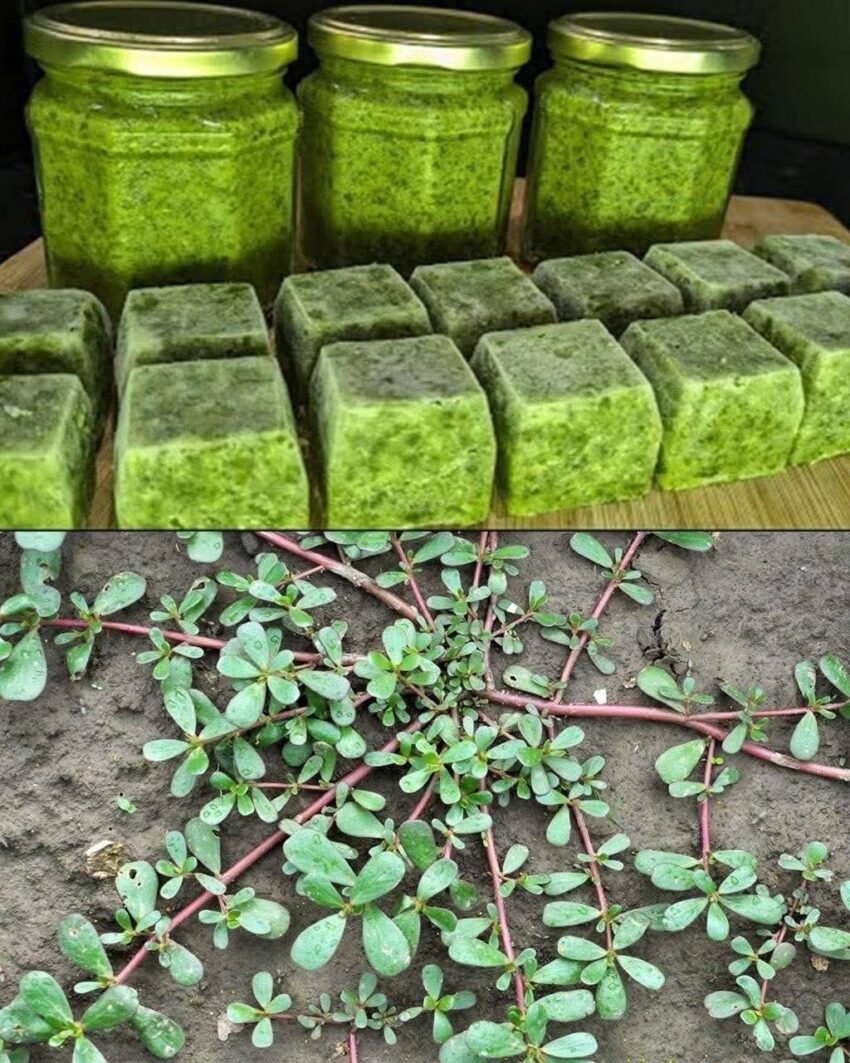
🌿 Common Purslane
Common purslane (scientific name: Portulaca oleracea) is a small, fast-growing edible succulent plant often found growing wild in gardens, fields, roadsides, and cracks in pavement. Many people consider it a weed, but it is actually highly nutritious and edible.
🌱 Key Characteristics
- Leaves: Small, smooth, thick, and oval (succulent-like).
- Stems: Reddish, fleshy, and grow close to the ground.
- Flowers: Tiny yellow flowers that open in sunlight.
- Growth habit: Spreads along the ground forming a mat.
🌍 Where It Grows
Common purslane grows in warm climates around the world, including:
- Pakistan
- India
- Turkey
- Mexico
- Mediterranean regions
In South Asia it is commonly called:
- Kulfa / Kulfaa (کلّفا) in Urdu
- Lunia / Kulfa saag in some regions
🥗 Nutritional Benefits
Purslane is considered a superfood because it contains:
- High Omega-3 fatty acids
- Vitamin A, C, and E
- Magnesium, potassium, and iron
- Antioxidants
It actually contains more omega-3 than most leafy vegetables.
🍲 How It Is Used
People eat it in many ways:
- Salads (raw leaves and stems)
- Kulfa saag curry in South Asian cooking
- Soups and stews
- Pickled purslane
In some cuisines like in Turkey and Greece it is mixed with yogurt and garlic.
⚠️ Caution
- Purslane contains oxalic acid, so people with kidney stone problems should eat it in moderation.
✅ Interesting fact: Purslane is one of the few plants that uses both C4 and CAM photosynthesis, helping it survive extreme heat and drought.
✅ If you want, I can also show you:
- How to identify purslane vs poisonous look-alikes
- Health benefits of Kulfa
- How to cook Kulfa (Pakistani style recipe).
