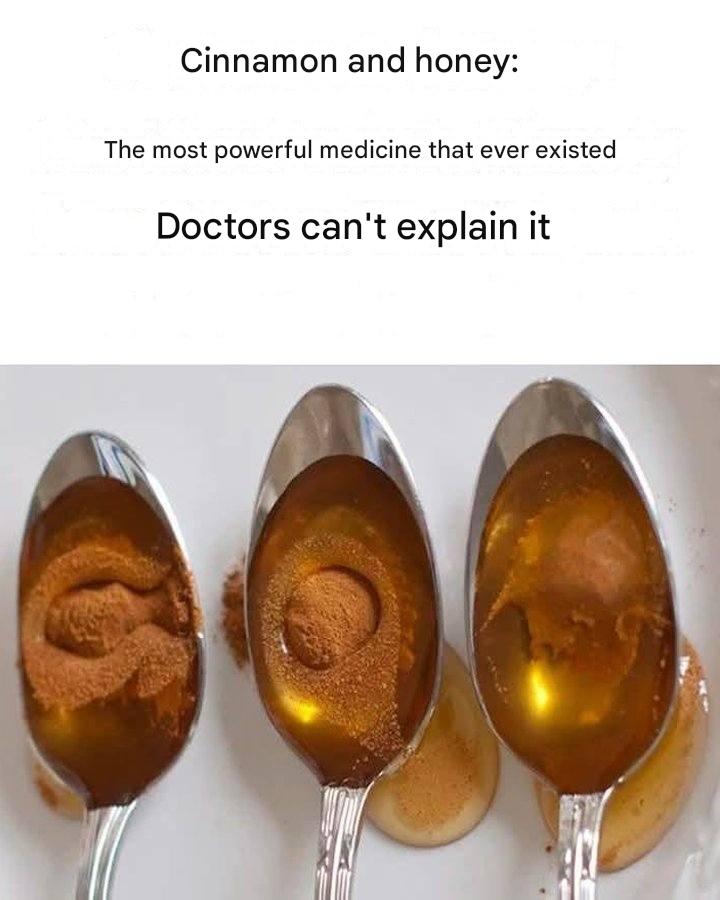
It sounds like you’re referring to the popular claim that cinnamon and honey together form a “miracle remedy”—something often shared online as “even doctors don’t want you to know.” Let’s separate hype from reality.
🌿 What cinnamon + honey actually can do
Both ingredients do have real health properties:
1. Antioxidant & anti-inflammatory effects
- Cinnamon contains compounds like cinnamaldehyde that may help reduce inflammation.
- Honey is rich in antioxidants and has soothing properties.
2. Helps with coughs & sore throat
- Honey is widely used as a natural cough suppressant.
- Warm water + honey + cinnamon can feel soothing for throat irritation.
3. May support blood sugar control
- Cinnamon has been studied for helping regulate blood sugar, especially in people with Type 2 Diabetes.
- But the effect is modest—not a replacement for medication.
4. Mild antibacterial properties
- Honey (especially raw varieties) can inhibit some bacteria.
- Cinnamon also has antimicrobial effects.
⚠️ What it does NOT do
Despite viral claims, there is no strong scientific evidence that cinnamon + honey can:
- Cure cancer
- Reverse serious diseases
- Replace prescribed medicines
- Cause major weight loss on its own
These claims are exaggerated or false.
🧠 Why the myth exists
Natural remedies feel powerful because:
- They do have mild benefits
- They’re easy and accessible
- Stories spread faster than science
But doctors aren’t “hiding” this—they just rely on treatments proven through rigorous testing.
👍 Safe way to use it
If you want to try it as a wellness drink:
- 1 cup warm water
- 1 teaspoon honey
- A pinch of cinnamon
Drink once daily—not excessive amounts.
⚠️ Precautions
- Too much cinnamon (especially cassia) can harm the liver
- Honey should not be given to infants under 1 year
- If you have diabetes, monitor sugar intake (honey still raises blood glucose)
Bottom line
Cinnamon and honey are helpful natural ingredients, but not a “powerful hidden cure.” Think of them as supportive—not magical.
If you want, I can break down which conditions they actually help with the most (backed by research).
