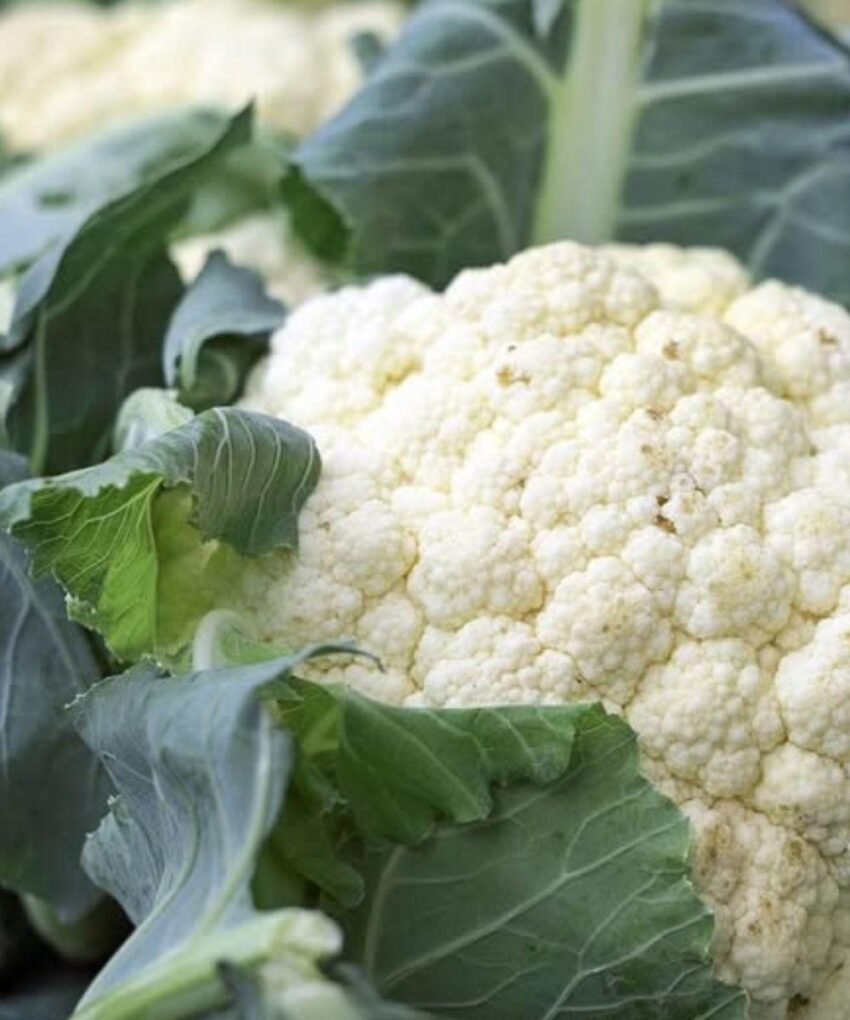
Cauliflower is a nutritious vegetable that belongs to the cruciferous family, the same group as broccoli, cabbage, and kale. It’s widely used in many cuisines and can be eaten raw, cooked, roasted, or mashed.
🌱 Basic Facts
- Scientific name: Brassica oleracea
- Family: Cruciferous vegetables
- Common colors: White (most common), but also purple, green, and orange varieties exist.
- Edible parts: The white curd (head) and sometimes the leaves and stems.
🥗 Nutrition (per ~100 g)
Cauliflower is low in calories but rich in nutrients:
- Calories: ~25
- Vitamin C: High
- Vitamin K: Good source
- Fiber: ~2 g
- Folate & B vitamins
💪 Health Benefits
- Supports immune system (vitamin C)
- Helps digestion (fiber)
- Contains antioxidants that may reduce inflammation
- Low-carb alternative for rice, pizza crust, and mashed potatoes
🍳 Common Ways to Cook Cauliflower
- Roasted: Toss with oil, salt, and spices; roast at ~200 °C for 20–25 minutes.
- Steamed: Keeps nutrients and soft texture.
- Stir-fried: Popular in Asian dishes.
- Cauliflower rice: Grated and sautéed as a rice substitute.
- Curries: Common in South Asian dishes like aloo gobi.
🛒 How to Choose Good Cauliflower
- Head should be firm and compact
- Creamy white color without brown spots
- Leaves should look fresh and green
🧊 Storage
- Keep in the refrigerator in a loose plastic bag.
- Best used within 3–5 days.
✅ Tip: If cauliflower smells a bit strong when cooking, that’s normal—it’s from natural sulfur compounds.
If you want, I can also show you:
- 5 easy cauliflower recipes
- How to remove worms from cauliflower before cooking
- Pakistani/Indian style cauliflower dishes (gobi recipes).
