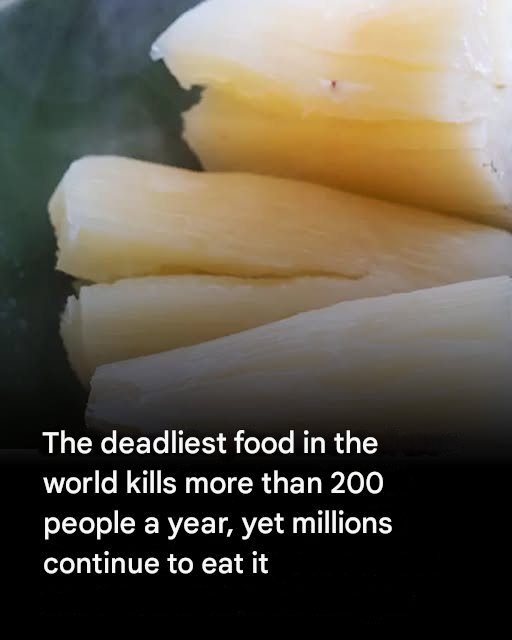
Cassava is a lifesaver for millions—and a hidden danger for those who prepare it incorrectly.
Cassava (also called Cassava, yuca, or manioc) is a staple food for hundreds of millions of people in Africa, Asia, and Latin America because it grows well in poor soils and drought conditions. The roots are rich in carbohydrates and provide an important source of calories.
Why it can be dangerous ⚠️
Cassava naturally contains compounds called cyanogenic glycosides, which can release cyanide when the plant tissue is damaged or eaten raw. If cassava is not properly processed, it can cause poisoning.
Possible health effects
Eating improperly prepared cassava can lead to:
- Cyanide poisoning
- Nausea and vomiting
- Dizziness and headaches
- Nerve damage and paralysis in severe cases
- A neurological disease called Konzo, linked to long-term consumption of poorly processed cassava during food shortages
How people make it safe
Traditional preparation methods remove most of the toxins:
- Peeling the root
- Soaking or fermenting it
- Drying or grating
- Thorough cooking (boiling, roasting, or frying)
These steps break down and release the harmful compounds, making cassava safe to eat.
Why people still rely on it
Despite the risks, cassava remains vital because it:
- Survives drought better than many crops
- Produces large amounts of food per hectare
- Can stay in the ground for months until needed
Because of this resilience, cassava plays a major role in global food security.
✅ Interesting fact: Some varieties called “sweet cassava” contain much lower toxin levels than “bitter cassava,” but both still need proper preparation before eating.
If you’d like, I can also explain the simple village technique that removes up to 90% of cassava’s toxins—it’s surprisingly clever. 🌿
