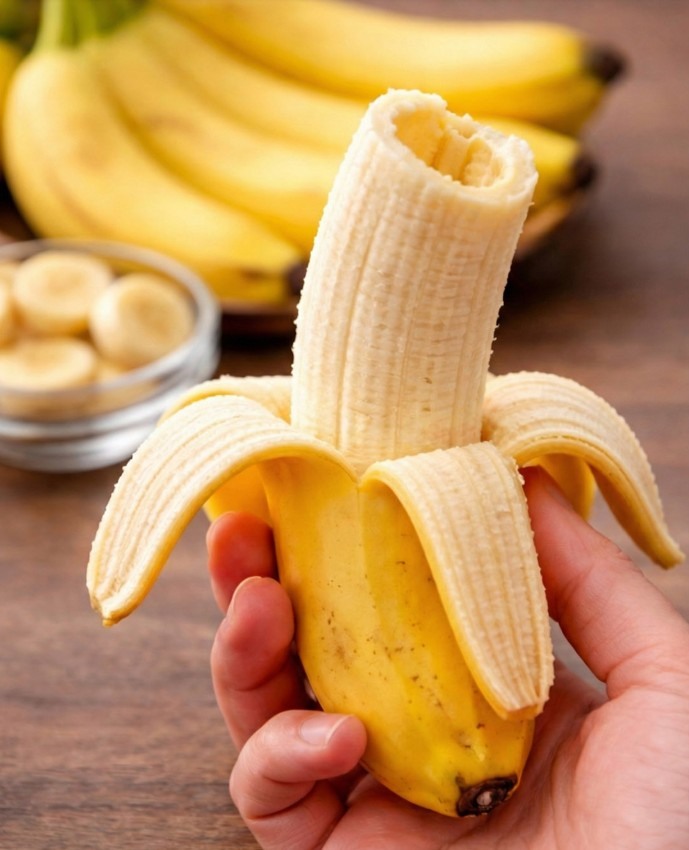
Banana is a sweet, tropical fruit that grows on large herbaceous plants of the genus Musa. 🍌 It is one of the most widely consumed fruits in the world and is valued for its natural sweetness, convenience, and nutritional benefits.
Key Features
- Flavor: Sweet and mildly tangy
- Texture: Soft and creamy when ripe
- Color: Typically yellow when ripe, green when unripe, with brown spots indicating full ripeness
Nutritional Benefits
- Carbohydrates: Provides quick energy through natural sugars
- Potassium: Supports heart, nerve, and muscle function
- Fiber: Aids digestion and promotes satiety
- Vitamins: Rich in vitamin C, vitamin B6, and antioxidants
Common Uses
- Raw snack: Eaten as-is for convenience
- Smoothies and shakes: Adds natural sweetness and creaminess
- Baking: Used in muffins, banana bread, and pancakes
- Desserts: Topped with yogurt, chocolate, or nuts
- Frozen treats: Blended or sliced for ice creams and popsicles
Tips
- Store unripe bananas at room temperature to ripen; refrigerate ripe bananas to slow further ripening (skin may darken).
- Overripe bananas are perfect for baking or smoothies due to their concentrated sweetness.
- Combine with peanut butter, oatmeal, or yogurt for a balanced snack.
💡 Fun Fact: Bananas are technically berries, and the banana plant is considered a herb, not a tree.
I can also give 5 creative ways to use bananas beyond just eating them raw if you want.
