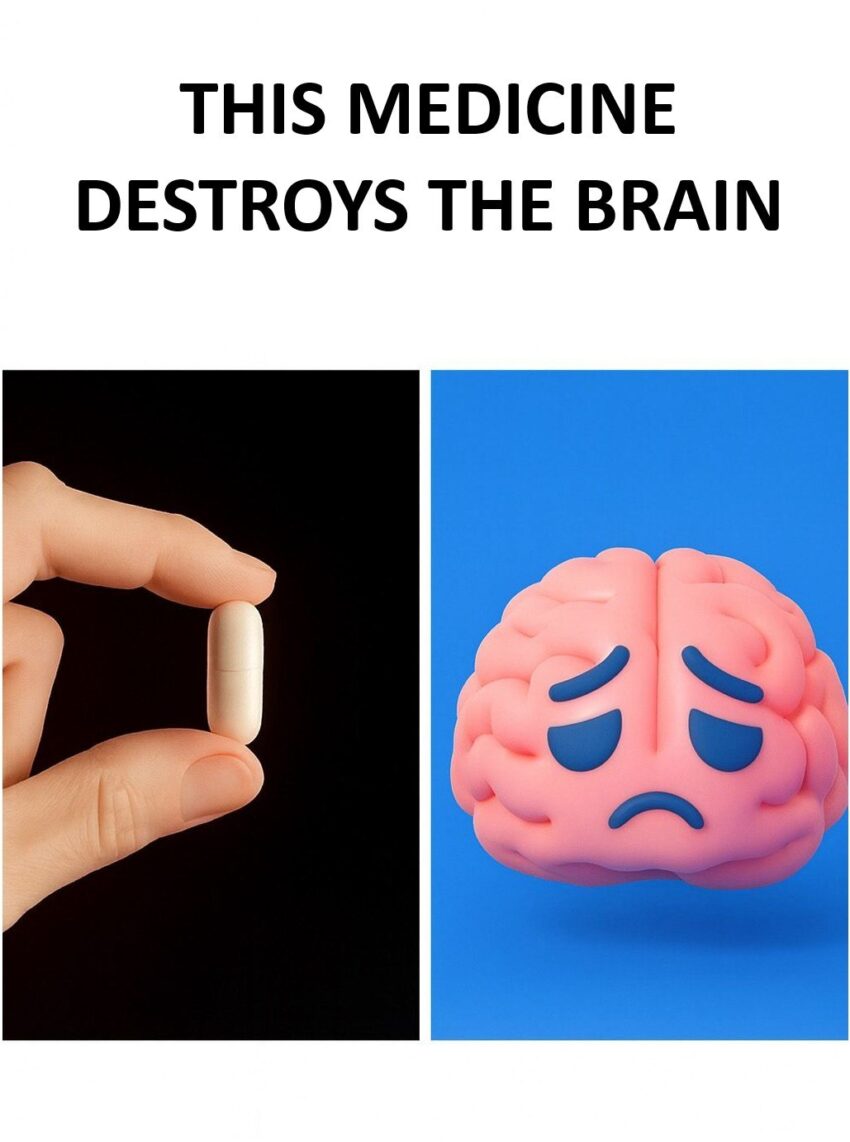
Here’s a doctor‑verified alert about common medications that — especially with long‑term use or in older adults — have been linked in research to an increased risk of cognitive decline or dementia‑like symptoms. Some of these drugs don’t directly cause dementia, but they can worsen memory, confusion, or thinking problems, especially when combined with aging or other health issues.
🧠 8 Drugs That Can Seriously Affect Brain Health
1️⃣ Anticholinergic Medications
These block acetylcholine, an important brain chemical for memory and thinking.
Common ones include:
- Diphenhydramine (Benadryl) — allergy/sleep aid
- Oxybutynin & Tolterodine — bladder control meds
- Amitriptyline — older antidepressant
➡️ Linked with higher dementia risk with long‑term use.
2️⃣ Benzodiazepines
Used for anxiety, insomnia, or muscle relaxation:
- Diazepam (Valium)
- Lorazepam (Ativan)
- Alprazolam (Xanax)
⚠️ Long‑term use can cause memory impairment, confusion, and increased dementia risk in older adults.
3️⃣ Sleep Medications / Z‑Drugs
Often prescribed for insomnia:
- Zolpidem (Ambien)
- Eszopiclone (Lunesta)
They can cause daytime drowsiness, memory gaps, and cognitive fog, especially in seniors.
4️⃣ Opioid Painkillers
Chronic use may slow brain function and impair memory:
- Oxycodone
- Hydrocodone
- Morphine
- Fentanyl
Long‑term opioid use has been linked with cognitive decline and confusion.
5️⃣ Certain Antipsychotics
Used for behavioral symptoms in dementia and psychiatric conditions:
- Olanzapine
- Risperidone
- Quetiapine
These can sometimes worsen confusion and attention issues, especially in the elderly.
6️⃣ Proton Pump Inhibitors (PPIs)
Used for acid reflux / heartburn:
- Omeprazole
- Lansoprazole
- Esomeprazole
Several studies have found associations between long‑term PPI use and increased dementia risk — though not definitively proven.
7️⃣ Corticosteroids (Long‑Term Use)
Strong anti‑inflammatory drugs like:
- Prednisone
- Dexamethasone
Long‑term use can affect mood, memory, and cognitive processing.
8️⃣ Some Antihistamines
Especially first‑generation ones that cross into brain tissue:
- Chlorpheniramine
- Promethazine
Like diphenhydramine, these can block brain acetylcholine and cause memory issues.
🧠 How These Drugs Affect the Brain
✔ Many block key brain chemicals
✔ Some slow neural signaling
✔ Others cause long‑term inflammation or metabolic stress
✔ Combined with age or other meds, risks increase greatly
Important: These drugs don’t automatically cause dementia, but they can accelerate cognitive decline — especially in older adults, those with existing memory problems, or people taking multiple medications.
🚨 Who Is Most at Risk
You should be particularly cautious if you:
➡ Are age 65 or older
➡ Take multiple medications
➡ Have pre‑existing memory issues
➡ Have sleep problems, anxiety, or chronic pain
🩺 What You Should Do Next
- Don’t stop any Rx abruptly.
- Discuss alternatives with your doctor — safer options often exist.
- Ask:
“Is this medication necessary? Can we reduce the dose?”
“Does this interact with my other drugs?” - Consider non‑drug treatments for conditions like insomnia, anxiety, or allergies.
🧠 Red Flags You Should Report to Your Doctor
🚩 Sudden memory loss or confusion
🚩 Trouble concentrating
🚩 Daytime drowsiness or “brain fog”
🚩 Mood swings or anxiety
🚩 Trouble with daily tasks
If these appear after starting a medication above — tell your doctor right away.
✅ Bottom line: Some commonly used drugs — especially in older adults — are linked with serious cognitive problems and dementia risk. It’s essential to review your medication list with a healthcare provider.
If you want, I can also provide a safe alternatives list for each of these 8 drug categories that are less harmful to brain health. 💊🧠
