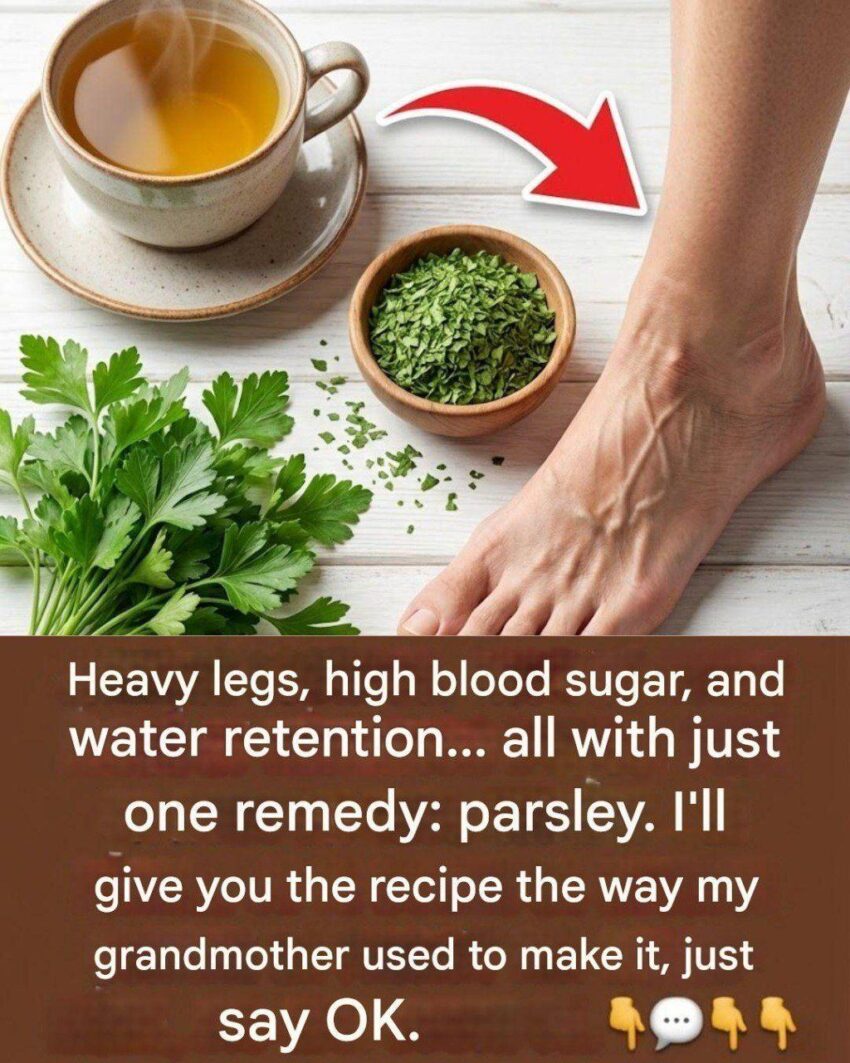
Ah! That sounds like one of those traditional health claims often shared online:
“Parsley: the simple remedy our grandmothers used for …”
Here’s a science-based look at parsley and its traditional uses:
🌿 Parsley: More Than Just a Garnish
Parsley is rich in vitamins A, C, K, minerals (like iron and potassium), and antioxidants. Because of this, it has been used traditionally as a home remedy for:
1️⃣ Digestive Aid
- Helps relieve mild bloating or indigestion
- Can be brewed as a tea to soothe the stomach
2️⃣ Fresh Breath
- Chewing fresh parsley helps neutralize odors because of its chlorophyll content
3️⃣ Mild Diuretic
- Traditionally used to support kidney and urinary health
- May help reduce water retention in some cases
4️⃣ Anti-Inflammatory & Antioxidant Effects
- Contains flavonoids and vitamin C that can combat oxidative stress
5️⃣ Nutrient Boost
- Adds essential vitamins and minerals to your diet, especially vitamin K for bone health
⚠️ Important Notes
- Parsley is safe in normal dietary amounts.
- Extremely high doses (like supplements) may be unsafe, especially in pregnancy or if you have kidney issues.
- It cannot replace medical treatments for serious conditions (kidney disease, liver problems, or infections).
💡 How to Use Parsley Safely
- Sprinkle fresh parsley on salads, soups, or roasted vegetables
- Make a parsley tea: steep 1–2 tsp fresh chopped parsley in hot water for 5–10 minutes
- Blend into green smoothies for a nutrient boost
If you want, I can make a list of 5 “grandmother’s parsley remedies” with explanations of which ones are supported by science and which are more folklore.
Do you want me to do that?
