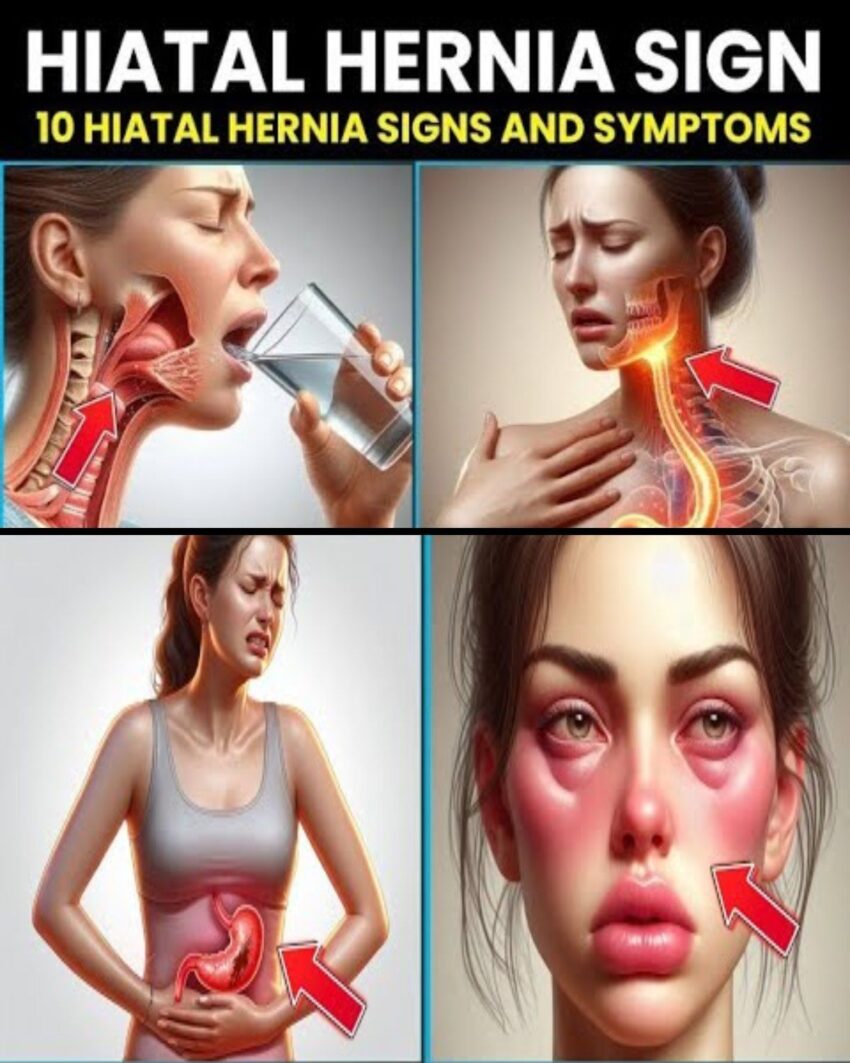
Hiatal Hernia: 10 Signs & Symptoms You Should Know
A hiatal hernia happens when part of the stomach pushes up through the diaphragm into the chest. Many are small and cause no symptoms — but larger ones can create noticeable digestive problems.
Here are 10 common signs to watch for:
1️⃣ Heartburn
Burning sensation in the chest, especially after eating or lying down.
2️⃣ Acid Reflux
Stomach acid backing up into the throat (GERD symptoms).
3️⃣ Chest Pain
Can feel sharp or pressure-like (always rule out heart issues first).
4️⃣ Difficulty Swallowing
Food may feel “stuck” in the chest.
5️⃣ Regurgitation
Sour or bitter liquid coming back into the mouth.
6️⃣ Chronic Cough
Especially worse at night due to acid irritation.
7️⃣ Hoarseness or Sore Throat
From acid irritating the vocal cords.
8️⃣ Bloating & Belching
Excess gas or fullness after eating.
9️⃣ Shortness of Breath
Large hernias can press on lungs.
🔟 Nausea or Vomiting
More common in larger or complicated hernias.
🚨 Emergency Symptoms (Seek Care Immediately)
- Severe chest pain
- Sudden vomiting
- Inability to pass gas or have a bowel movement
- Black stools
- Severe abdominal pain
These may indicate a strangulated hernia, which is rare but serious.
🩺 Risk Factors
- Age over 50
- Obesity
- Pregnancy
- Chronic coughing
- Heavy lifting
💡 When to See a Doctor
If symptoms are frequent, worsening, or not controlled with lifestyle changes or antacids, a provider may recommend testing (like endoscopy or imaging).
If you’d like, I can also share:
- The best diet for hiatal hernia
- Natural remedies that may help
- Exercises to avoid
- Or how it’s treated (medications vs surgery)
What would you like to know next?
