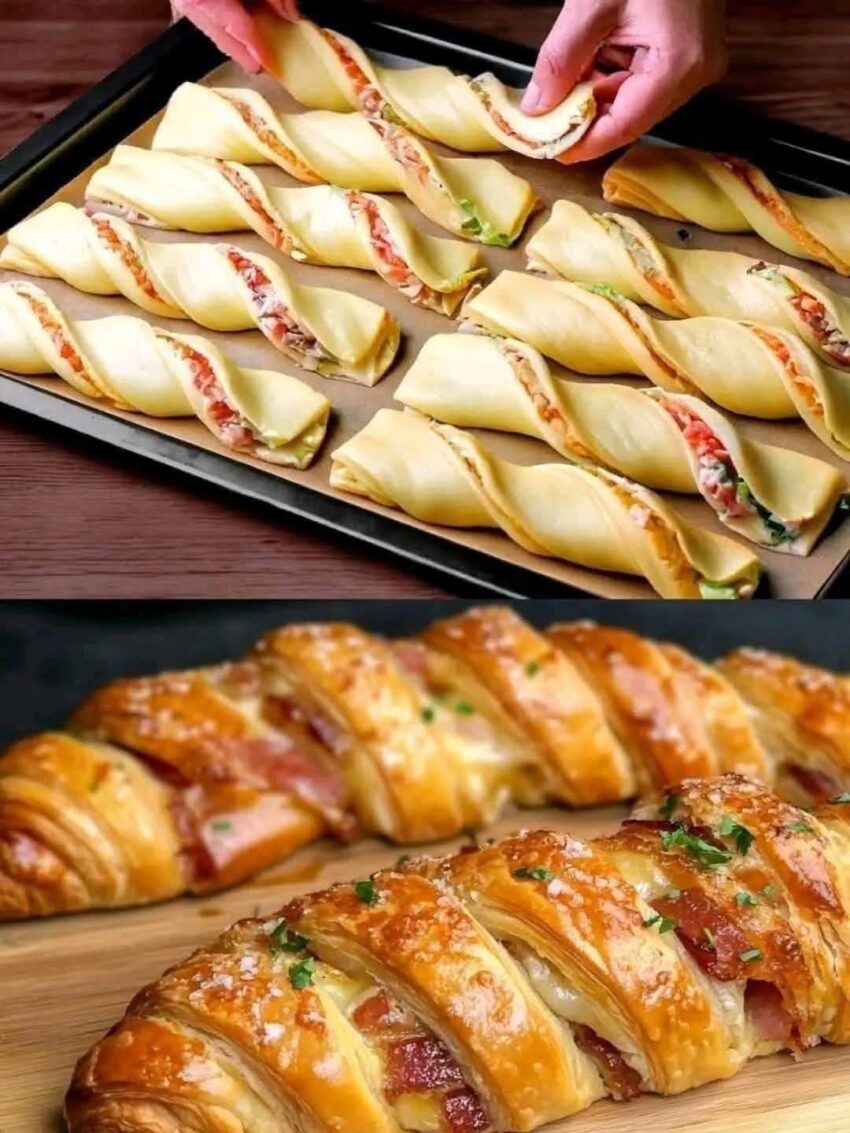
Ah, puff pastry—the flaky, buttery wonder that can transform any dish into something elegant! Here’s a detailed guide covering what it is, how to use it, and some tips:
What Puff Pastry Is
- Puff pastry is a laminated dough made by folding butter into dough multiple times to create thin layers of dough and butter.
- When baked, the water in the butter turns to steam, causing the dough to puff up into airy, flaky layers.
- It’s neutral in flavor, so it works in both sweet and savory dishes.
Buying vs. Making
- Store-bought: Convenient, pre-rolled sheets are widely available in frozen form. Simply thaw according to package instructions before using.
- Homemade: Requires folding, rolling, and resting dough several times—more labor-intensive but gives unmatched flakiness.
Basic Uses
Savory:
- Cheese and herb pinwheels
- Sausage rolls
- Chicken or beef pot pie tops
- Puff pastry tart with vegetables
Sweet:
- Fruit turnovers or tarts
- Palmiers (elephant ears)
- Mille-feuille or Napoleons
- Mini chocolate or jam pastries
Tips for Perfect Puff Pastry
- Keep it cold: Puff pastry works best when butter is firm. Warm dough = less puff.
- Don’t overwork: Handle dough gently to maintain layers.
- Docking: Prick the dough with a fork for tarts or pies to prevent uneven puffing.
- Egg wash: Brush with a beaten egg or egg + milk mixture for a golden, shiny crust.
- Bake at high temperature: Usually 375–400°F (190–200°C) for even puffing.
If you want, I can also give a quick guide to turning frozen puff pastry into a complete savory or sweet dish in under 20 minutes—super useful for last-minute meals or desserts.
Do you want me to give that guide?
