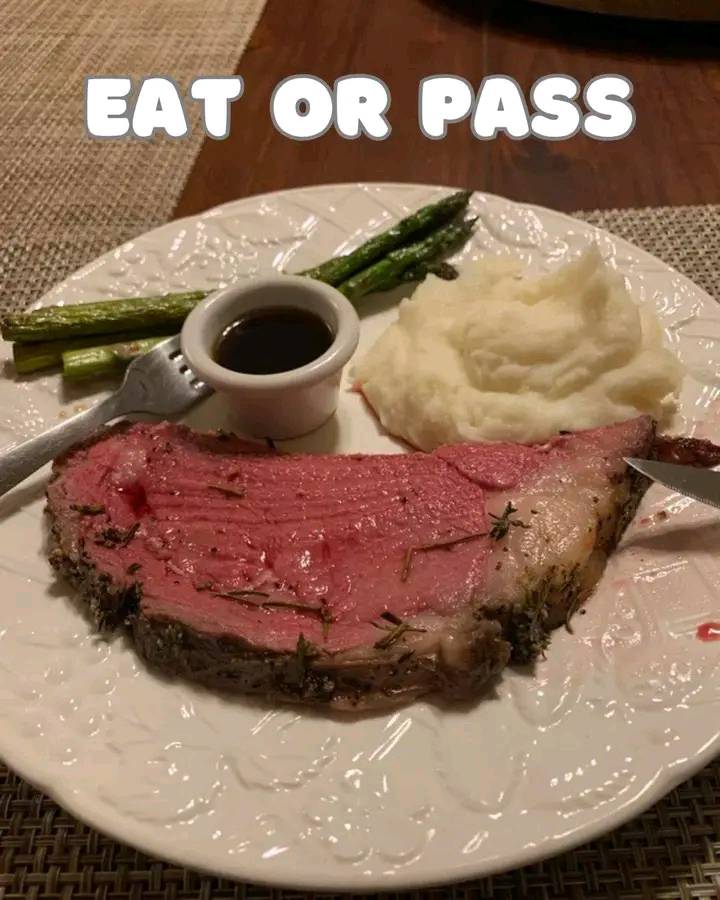
🥩 What It Is
Prime rib comes from the rib section of the cow (ribs 6–12). It contains excellent marbling, which gives it a rich, buttery flavor when roasted.
🛒 Ingredients
-
1 (4–7 lb) bone-in prime rib roast (about 2 ribs serve 4–6 people)
-
2–3 tbsp kosher salt
-
1 tbsp freshly cracked black pepper
-
1 tbsp garlic powder
-
1 tbsp fresh rosemary or thyme, finely chopped (optional)
-
2–3 tbsp olive oil or softened butter
🧂 Preparation
-
Dry and season:
Pat the roast dry with paper towels. Rub with olive oil or butter, then season generously with salt, pepper, and garlic powder (and herbs if using).
For best results, season it at least 24 hours in advance, uncovered in the fridge — this dry-aging step deepens flavor and dries the surface for better browning. -
Bring to room temperature:
Take the roast out of the fridge 2–3 hours before cooking to ensure even roasting.
🔥 Roasting Method (Oven)
Option 1: Traditional Reverse Sear (Most Reliable)
-
Preheat oven to 250°F (120°C).
-
Place roast, fat-side up, on a rack in a roasting pan.
-
Roast until internal temperature reaches:
-
115°F (46°C) for rare
-
120°F (49°C) for medium-rare
-
130°F (54°C) for medium
(This usually takes 20–25 minutes per pound.)
-
-
Remove roast and let rest 20–30 minutes, loosely covered with foil.
-
Increase oven to 500°F (260°C) and return roast for 5–8 minutes to crisp the crust.
-
Rest again for 10 minutes before carving.
Option 2: High-Heat Start (Classic Restaurant Style)
-
Preheat to 450°F (230°C).
-
Roast for 15–20 minutes, then reduce to 325°F (165°C) and continue roasting until desired internal temperature (use the same guide above).
🍷 Serving Suggestions
-
Horseradish cream sauce or au jus
-
Yorkshire pudding, mashed potatoes, or roasted vegetables
-
A bold red wine (Cabernet Sauvignon, Syrah, or Zinfandel)
🧑🍳 Chef’s Tips
-
Always use a meat thermometer for accuracy.
-
Resting is crucial — it allows juices to redistribute and prevents dryness.
-
Save the bones for beef stock or re-roast them for snacks!
Would you like me to include a horseradish cream sauce or au jus recipe to go with it?
