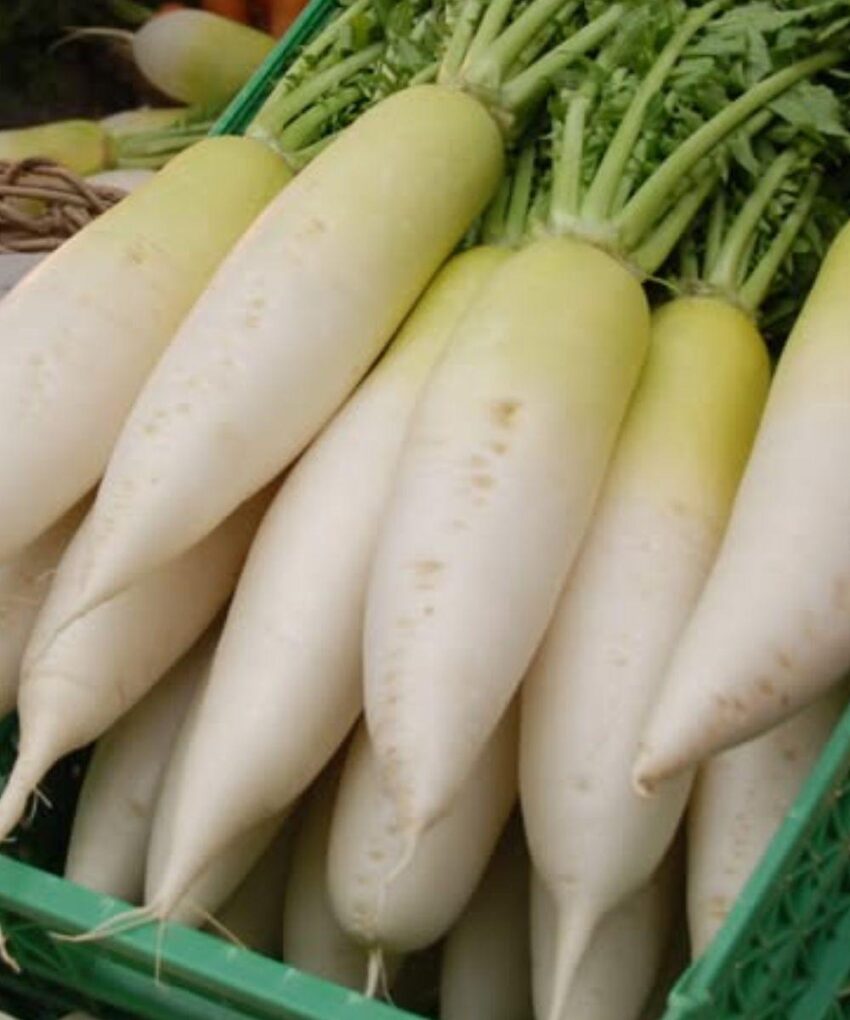
Korean radish, also called mu (무), is a large, firm, white root vegetable commonly used in Korean cuisine. It has a mild, slightly sweet flavor and crunchy texture.
🥗 Nutritional Highlights (per 100g)
- Calories: ~20
- Carbohydrates: 4–5g
- Fiber: 1–2g
- Vitamin C: ~25% of daily value
- Minerals: Potassium, calcium, magnesium
🌟 Health Benefits
- Digestive health – High fiber promotes regular bowel movements.
- Immune support – Rich in vitamin C to strengthen immunity.
- Detoxification – Contains antioxidants that help remove toxins.
- Low-calorie & hydrating – Great for weight management and hydration.
- Supports liver health – Traditional Korean medicine uses radish to aid digestion and detox.
🍽 Culinary Uses
- Kimchi: Cubed or julienned for kkakdugi (radish kimchi).
- Soups & stews: Adds sweetness and crunch to dishes like gomguk or daikon soup.
- Pickled: Quick pickles with vinegar, sugar, and salt.
- Raw: Sliced thin in salads or wraps for crunch.
🌟 Tips
- Choose radishes that are firm, smooth, and heavy for their size.
- Store in the fridge, wrapped in plastic or a damp towel, for up to 2 weeks.
- Can substitute daikon or other white radishes if unavailable.
If you want, I can give you 3 easy Korean radish recipes—including kimchi, pickles, and a comforting soup—that are simple to make at home.
Do you want me to do that?
