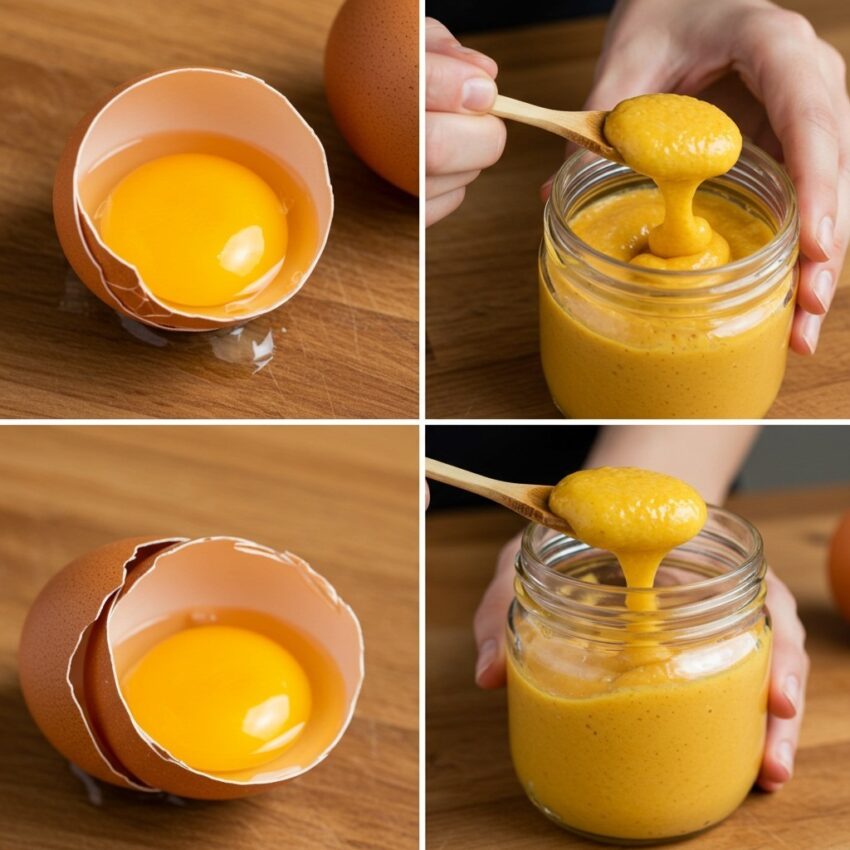
Ah, egg yolk—the golden part of the egg that’s packed with richness, fat, and flavor. Here’s a detailed overview:
What is an Egg Yolk?
- The egg yolk is the yellow, round center of the egg.
- It’s rich in fat, protein, vitamins (A, D, E, K, B12), and minerals.
- Contains lecithin, a natural emulsifier, which helps blend fats and liquids in cooking.
Uses of Egg Yolks in Cooking
- Custards & Puddings:
- Egg yolks thicken and create a smooth, creamy texture. Examples: crème brûlée, pastry cream, flan.
- Sauces & Emulsions:
- Yolks are key for emulsifying, creating stable mixtures like mayonnaise, hollandaise, or aioli.
- Baking:
- Adds richness, tenderness, and color to cakes, cookies, and breads.
- Glazes:
- Beaten yolk can be brushed on pastries, breads, or pies for a golden, glossy finish.
- Ice Cream & Frozen Desserts:
- Yolks help stabilize custard-based ice creams for smooth, creamy texture.
Tips for Using Egg Yolks
- Separate carefully: To avoid whites mixing, crack the egg and pass the yolk back and forth between the shell halves.
- Storage: Fresh yolks can be stored in the fridge for up to 2 days, ideally covered with a little water to prevent drying.
- Freezing: Yolks can be frozen, but should be mixed with a pinch of salt or sugar to prevent them from becoming gelatinous.
If you want, I can also give a list of recipes that use only egg yolks, so you can use up any leftover yolks from recipes that need whites.
Do you want me to do that?
