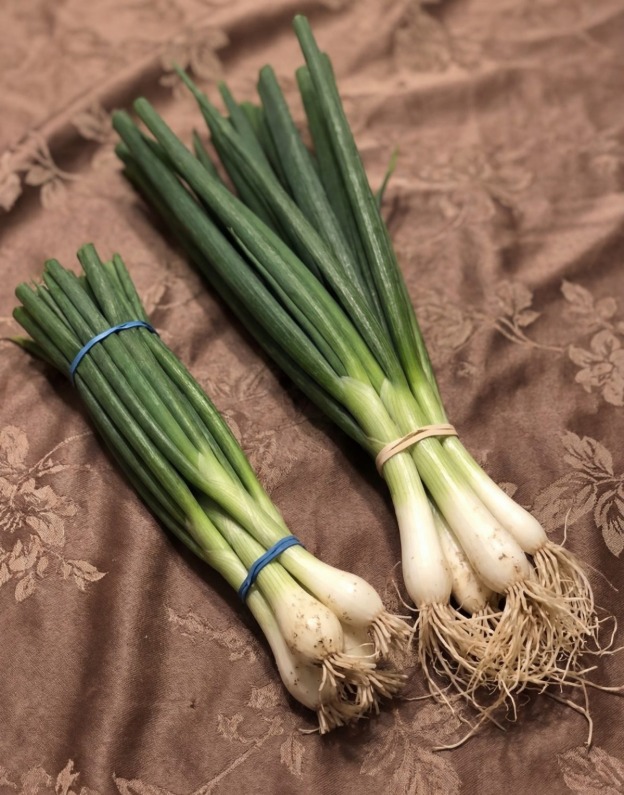
Bunching onions (also called green onions, spring onions, or scallions) are non-bulbing onions grown mainly for their tender green tops and mild white stems.
Quick overview
- Botanical type: Allium fistulosum (most common)
- Flavor: Mild, slightly sweet onion taste
- Bulb: Do not form large bulbs like storage onions
- Harvest: Cut-and-come-again; very fast growing
How they’re commonly used
- Fresh in salads, salsas, and garnishes
- Stir-fries, soups, and noodles
- Grilled whole or chopped for finishing dishes
Growing basics
- Planting: Direct sow seeds or transplant starts
- Sun: Full sun to partial shade
- Soil: Well-drained, fertile soil
- Water: Keep evenly moist
- Time to harvest: ~30–60 days
- Spacing: About 1 inch apart for thin stems, wider for thicker ones
Harvesting
- Pull entire plants, or
- Cut leaves about 1 inch above soil—they’ll regrow several times
Popular varieties
- ‘Evergreen Long White’
- ‘Tokyo Long White’
- ‘White Lisbon’
- ‘Red Beard’ (red stems)
If you’d like, tell me what you’re looking for—growing tips, cooking ideas, differences from scallions, or varieties for your climate—and I can tailor it 🌱
