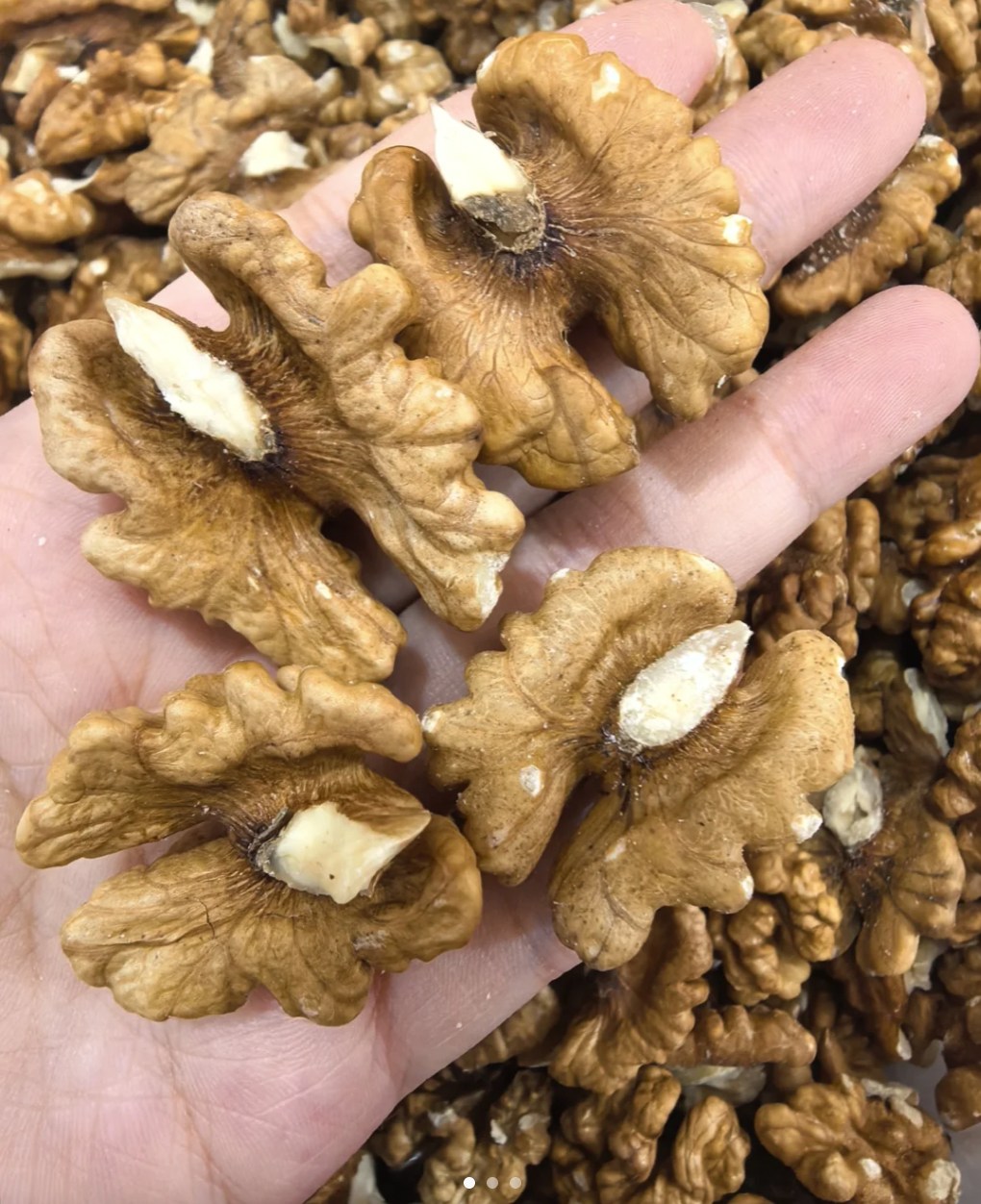
The English walnut (also known as the Persian walnut, Juglans regia) is the most common type of walnut eaten worldwide — the kind you usually find in baking, snacks, and grocery stores. 🌰
Here’s a quick overview:
🥜 About English Walnuts
- Origin: Native to Persia (modern-day Iran), but cultivated in England and throughout Europe for centuries — hence the name English walnut.
- Tree: A large, spreading tree that can grow up to 60 feet tall and produces a round, thin-shelled nut.
- Shell & Kernel: The shell is light brown and relatively easy to crack; inside is the pale, wrinkled kernel (the edible nut).
- Flavor: Mellow, buttery, and slightly earthy — milder than black walnuts, which are stronger and more pungent.
🍪 Culinary Uses
English walnuts are incredibly versatile:
- Baking: Used in cookies, cakes, brownies, banana bread, and fudge.
- Salads: Add crunch to green salads, fruit salads, or grain bowls.
- Breakfast: Sprinkle over oatmeal, yogurt, or pancakes.
- Savory dishes: Great in pesto, stuffing, or paired with blue cheese or roasted vegetables.
- Snacking: Enjoy raw, roasted, or lightly salted.
💪 Nutritional Benefits
- Rich in omega-3 fatty acids (especially alpha-linolenic acid, ALA)
- High in antioxidants, fiber, and protein
- Contains vitamins and minerals like magnesium, copper, and vitamin E
🧺 Storage Tips
- Store in an airtight container in a cool, dark place.
- For longer shelf life, keep in the fridge (up to 6 months) or freezer (up to a year) — walnuts can go rancid if left at room temperature too long.
Would you like me to give you a recipe that features English walnuts, like a classic English walnut pound cake or candied walnuts?
