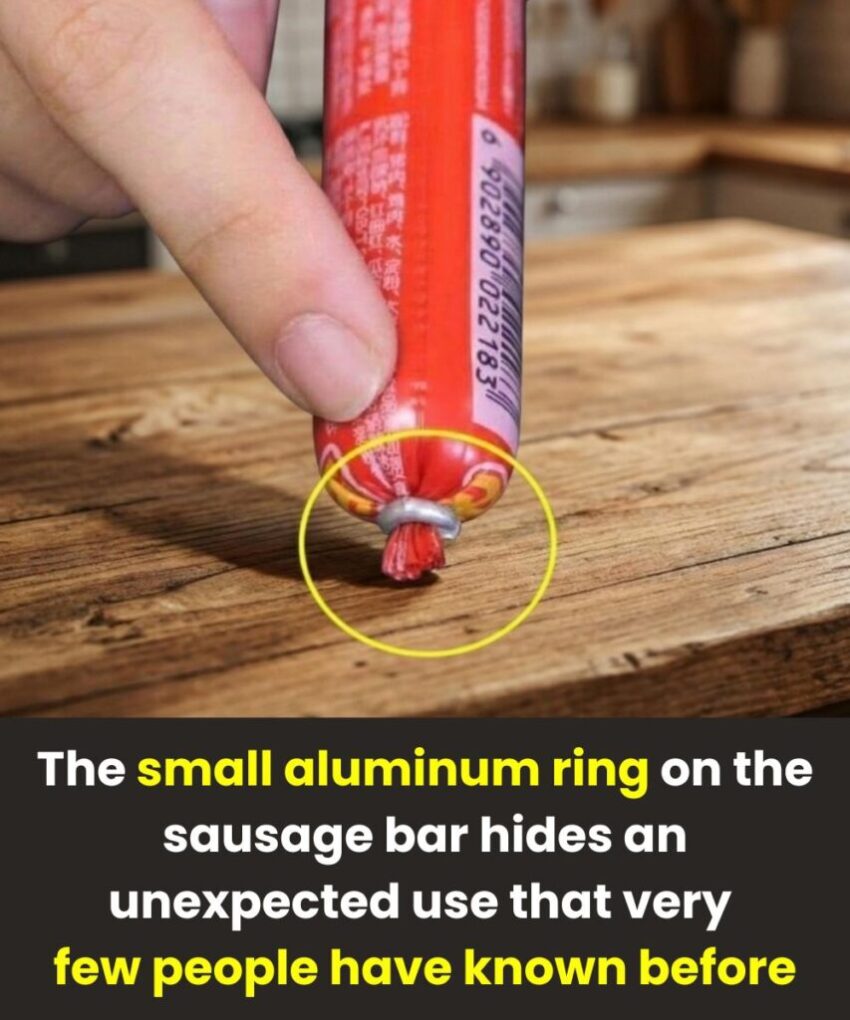
A “sausage bar with an aluminum ring” usually refers to a sausage stick (or link) that has a small metal ring clipped onto one end — a detail many people overlook but that has an important practical purpose in food production. (Likya)
🔍 What the Aluminum Ring Is For
Here’s what that little ring does:
1. Seals the sausage casing securely
After the meat mixture is filled into a natural or synthetic casing, the open end needs to be sealed to protect the contents. The aluminum ring (sometimes applied as a clip) is crimped tightly around the casing to create an airtight seal, keeping air, moisture, and contaminants out. This extends freshness and helps preserve flavor and texture. (Likya)
2. Helps maintain shape and integrity
The ring keeps the sausage’s filling compact and evenly distributed, preventing sagging, deformation, or leakage during storage and transport. (Likya)
3. Provides a hanging point
In commercial processing — especially for cured or smoked sausages — the aluminum ring gives a convenient place to hang the sausage so air can circulate evenly during drying or curing stages. (Likya)
4. Supports industrial packaging efficiency
Aluminum rings are lightweight and corrosion‑resistant, so machines can apply them quickly and consistently on production lines, which helps manufacturers meet food‑safety and quality standards efficiently. (Likya)
🧠 Why Aluminum Is Used
- Resistant to rust and corrosion — stays inert with moisture and many food environments. (ainister.com)
- Lightweight and easy to crimp — ideal for automatic clipping in factories. (Likya)
- Doesn’t affect taste or food safety — aluminum doesn’t react with the sausage flavors or casing. (Likya)
📌 Important: The aluminum ring is not edible and should be removed before cooking or eating. (Likya)
In short, that small aluminum ring isn’t decoration — it’s a functional closure and handling aid in sausage manufacturing that helps keep the product safe, fresh, and consistent from factory to your plate. (Likya)
