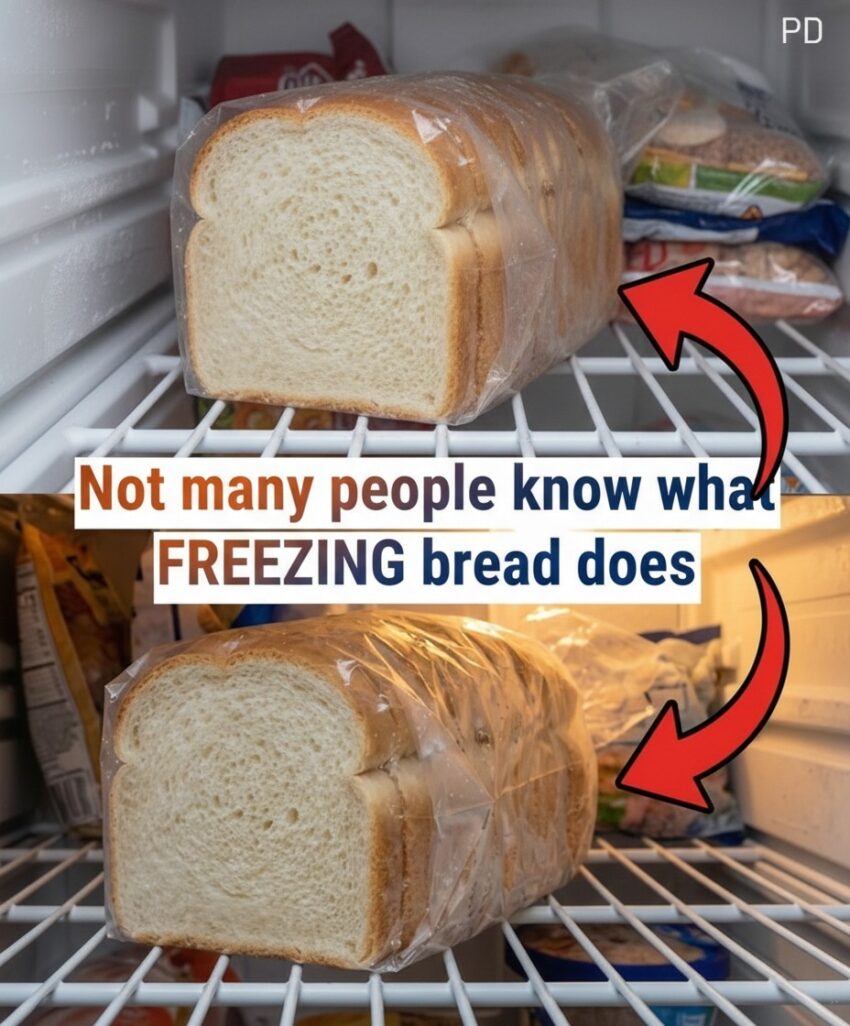
Freezing bread is a common way to preserve it, but it slightly changes its structure. Here’s a detailed breakdown:
What Happens When Bread Is Frozen
- Water Crystallization
- Bread contains water in its crumb (soft part).
- Freezing causes water to form ice crystals, which expand slightly and can disrupt the delicate structure of the bread.
- This can make the bread slightly drier or crumbly after thawing.
- Slowed Staling
- Staling happens when starch molecules crystallize over time.
- Freezing halts the staling process, keeping the bread closer to its fresh state for longer.
- Bread frozen immediately after baking will taste fresher than bread left at room temperature.
- Minimal Nutrient Loss
- Freezing has little effect on the nutritional content—carbs, proteins, and vitamins remain mostly intact.
- Texture Changes on Thawing
- Thawed bread can feel a bit chewier or drier, especially if not wrapped properly.
- Toasting or warming can restore some softness.
- Mold Prevention
- Freezing prevents mold growth, which normally develops at room temperature after a few days.
Tips for Freezing Bread
- Slice before freezing – Makes it easy to take out only what you need.
- Wrap tightly – Use plastic wrap or a freezer bag to prevent freezer burn.
- Thaw properly – Let it thaw at room temperature or toast slices directly from frozen.
If you want, I can explain why freezing is better than refrigerating bread, which is a common misconception that actually speeds up staling. Do you want me to break that down?
