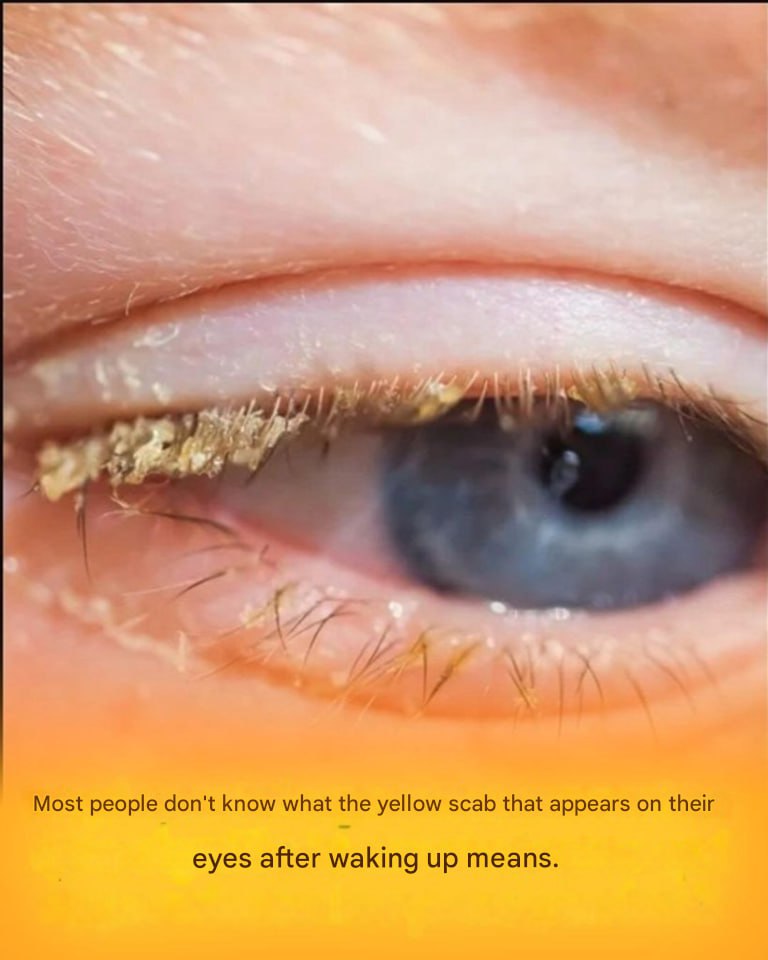
The yellow scab or crust that appears on your eyes after waking up is a very common phenomenon, and it’s usually completely normal. Here’s a detailed breakdown of what it is, why it forms, and when to be cautious:
👁️ What the Yellow Scab Is
- Often called eye mucus, eye discharge, or “sleep”.
- Scientifically, it’s a combination of:
- Tears (which contain water, proteins, and salts)
- Mucus from the conjunctiva (the thin membrane covering the eye)
- Dead skin cells and small debris
- Sometimes a few white blood cells that clean up bacteria or irritants
- The yellowish color usually comes from slightly concentrated proteins and lipids, and sometimes from tiny amounts of bacteria that are normally present on the eye surface.
🌙 Why It Appears Overnight
- While you sleep, your eyes produce fewer tears, so mucus, oils, and debris accumulate.
- Blinking during the day helps wash away these substances; when you’re asleep, this natural cleaning doesn’t happen.
- By morning, the accumulation dries slightly and forms the yellowish crust that sticks to lashes or the corners of the eyes.
✅ When It’s Normal
- Small amounts that wipe away easily with a tissue or water.
- Usually occurs in one or both eyes.
- No redness, pain, or vision problems.
⚠️ When to Be Concerned
If the yellow crust is persistent, thick, or accompanied by other symptoms, it could indicate an eye infection or other condition:
- Bacterial Conjunctivitis (Pink Eye)
- Thick yellow or green discharge
- Redness and irritation
- Sometimes eyes stick together after sleep
- Viral Conjunctivitis
- Watery or sticky discharge
- Redness, itchiness, or tearing
- Often spreads between both eyes
- Blocked Tear Duct (Especially in Children)
- Yellow crusting along the inner corner of the eye
- Excessive tearing during the day
- Blepharitis (Eyelid Inflammation)
- Scaly or crusty eyelids
- Itchiness or burning sensation
- May produce more eye discharge
🧼 Tips for Eye Hygiene
- Wash hands before touching your eyes.
- Use a clean tissue or cotton pad to gently wipe away discharge.
- Warm compresses can help if crusting is heavy or you have blepharitis.
- Avoid sharing towels or eye makeup to prevent infection.
- If discharge is persistent, thick, colored, or painful, see an eye doctor.
📌 Summary
- Yellow eye scabs in the morning are usually normal sleep-related eye discharge.
- They’re composed of mucus, tears, skin cells, and tiny debris that accumulate overnight.
- Seek medical attention if the discharge is persistent, thick, green, or accompanied by redness, pain, or vision changes.
If you want, I can make a visual guide showing normal morning eye discharge vs signs of infection so you can tell the difference at home. Do you want me to do that?
