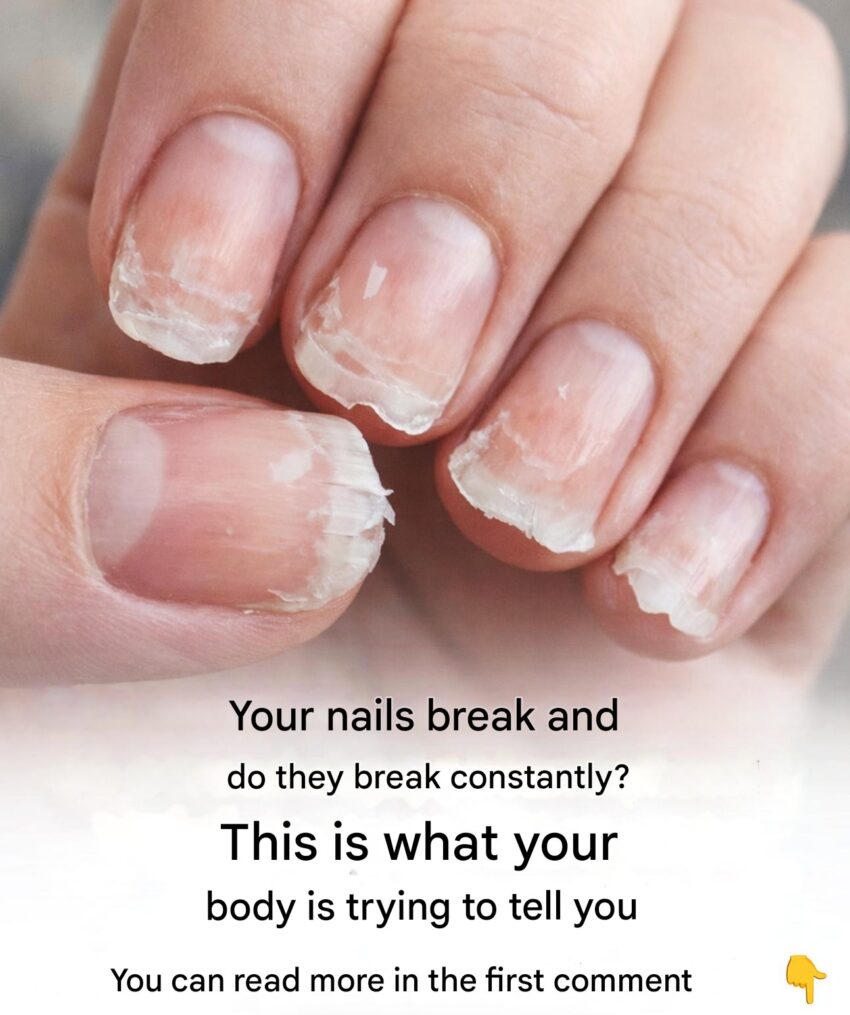
Brittle or fragile nails (medically called Onychoschizia when they split, or Onychorrhexis when they develop ridges) are very common—and usually harmless—but they can tell you something about your health or habits.
💅 Common Causes
🧴 Frequent Water & Chemicals
- Repeated handwashing, detergents, or sanitizers can dry nails out
- Nail polish removers (especially those with acetone) weaken nails
🥗 Nutritional Deficiencies
- Low levels of:
- Iron → linked with Iron deficiency anemia
- Biotin (Vitamin B7)
- Protein or zinc
🌬️ Dry Environment
- Cold weather or low humidity can make nails brittle
🧑⚕️ Health Conditions
Sometimes brittle nails are associated with:
- Hypothyroidism
- Psoriasis
- Eczema
💄 Nail Habits
- Frequent manicures or gel/acrylic nails
- Nail biting or picking
🛠️ What You Can Do
✔️ Daily Care
- Keep nails short and trimmed
- Moisturize nails and cuticles (use oils or creams)
- Wear gloves when washing dishes or cleaning
✔️ Nutrition
- Eat foods rich in:
- Iron (spinach, lentils, meat)
- Biotin (eggs, nuts)
- Protein
✔️ Products
- Use gentle, non-acetone removers
- Apply strengthening nail treatments
✔️ When to See a Doctor
- Nails are extremely brittle or worsening
- You notice other symptoms (fatigue, hair loss, pale skin)
- Nail color or shape changes significantly
🧠 Bottom Line
Most brittle nails come from external damage or dryness, not serious illness—but if they persist, it’s worth checking your nutrition and overall health.
If you want, tell me your symptoms (like peeling, ridges, color changes), and I can help narrow down the exact cause.
