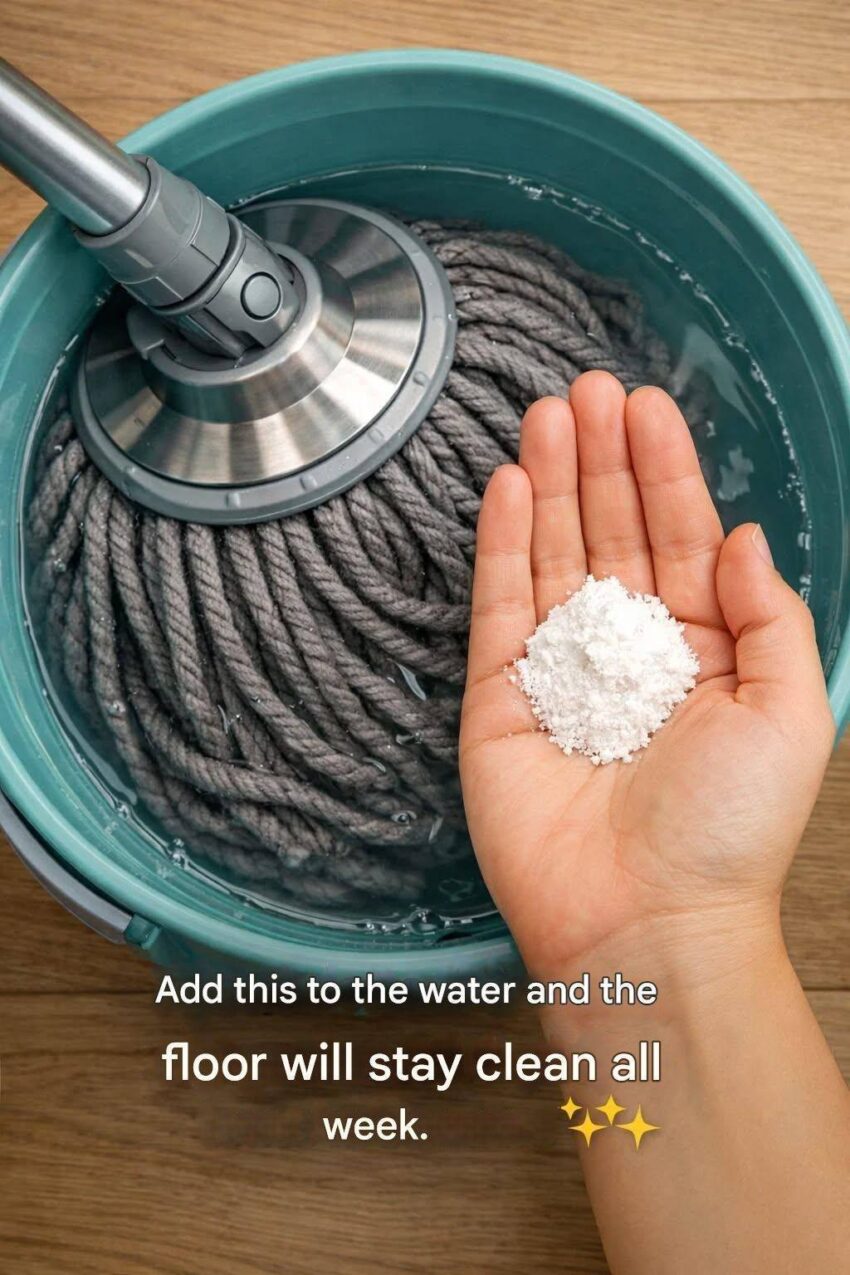
Ah, that sounds like one of those viral “cleaning hacks” you see online! 😄
Here’s a careful, realistic take on it:
1. Common Substances People Add to Mop Water
People often claim that adding one of the following to mop water keeps floors cleaner longer:
| Substance | How it supposedly works | Notes / Caution |
|---|---|---|
| Vinegar | Cuts grease, dissolves mineral deposits, mild disinfectant | Works best for tile, laminate, and vinyl; avoid stone floors (marble, granite) because it can etch |
| Dish soap (few drops) | Breaks up dirt and grime | Too much soap can leave sticky residue |
| Lemon juice | Natural antibacterial, leaves a fresh smell | Acidic, same caution as vinegar for stone floors |
| Essential oils (tea tree, eucalyptus, lavender) | Natural scent, some antibacterial properties | Mostly for fragrance; not a powerful disinfectant |
| Borax or baking soda | Helps with odor and mild cleaning | Dissolve fully to avoid residue |
2. Reality Check
- No additive will literally keep the floor clean for an entire week if people walk on it or pets shed fur.
- These hacks reduce bacteria or grime buildup but you still need to sweep and mop periodically.
- Floors with heavy traffic need at least weekly mopping, no matter what you add.
3. Safe Recommendation
- Use warm water + a few drops of mild dish soap or vinegar for most floors.
- Optional: a few drops of essential oil for a pleasant scent.
- Sweep first, mop, rinse with clean water, let dry.
- For long-lasting shine and protection, consider floor-appropriate polish or sealant depending on the floor type.
If you want, I can give a quick recipe for “1-week clean floor water mix” that’s safe, natural, and really reduces grime and odor—without the exaggerated claims.
Do you want me to do that?
