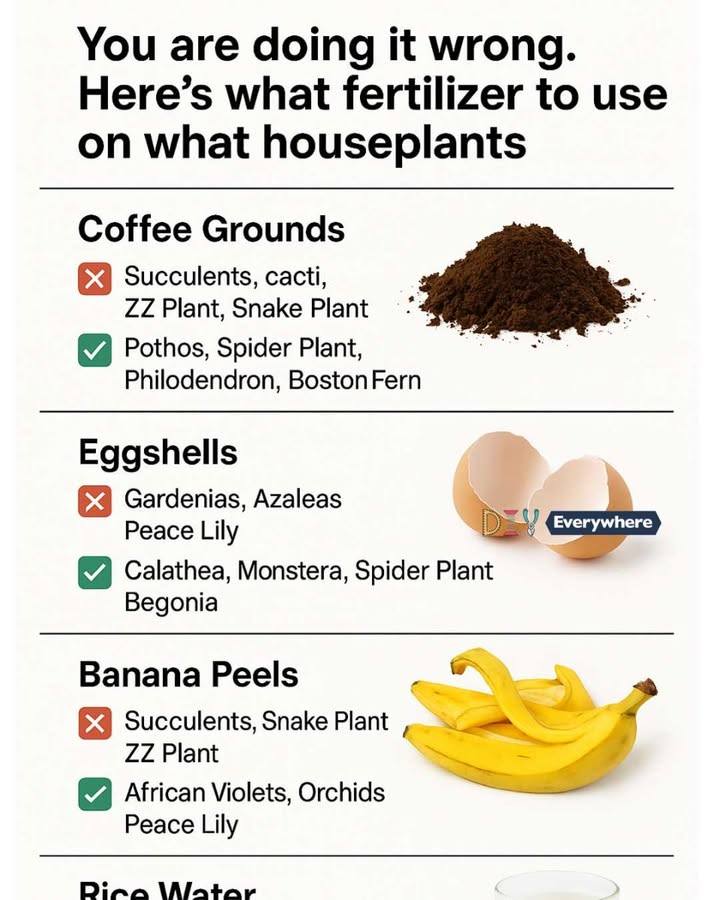
Using coffee grounds with houseplants can be helpful—but only for some, and only if used correctly. Here’s how it works for the plants you listed:
☕ General Rule for Coffee Grounds
- Use used (brewed) grounds only
- Let them dry first (prevents mold)
- Use sparingly—too much can cause mold, pests, or compact soil
- Best method: mix into compost or lightly into soil, not thick layers on top
🌵 Succulents & Cacti
- ❌ Avoid coffee grounds
- They prefer dry, fast-draining, low-organic soil
- Coffee grounds retain moisture → can cause root rot
🌿 ZZ plant
- ❌ Not recommended
- ZZ plants like well-draining, low-maintenance soil
- Coffee grounds can make soil too dense and wet
🌿 Snake plant
- ❌ Avoid
- Similar to succulents—prefers dry soil
- Coffee grounds increase moisture retention too much
🌿 Pothos
- ⚠️ Use very lightly
- Can benefit from slight acidity and nutrients
- Best way: mix a small amount into soil or compost, not directly on top
🌿 Spider plant
- ⚠️ Occasional use is okay
- Use tiny amounts—too much can harm roots
- Composting first is safest
👍 Best Way to Use Coffee Grounds
- Mix into compost → then use compost for plants
- Or:
- 1–2 teaspoons per pot
- Mix into topsoil lightly
- Use only every few weeks
🚫 What to Avoid
- Thick layer on soil surface
- Using fresh (unbrewed) grounds
- Overuse → can cause fungus, bad smell, or pests
Bottom Line
- ❌ Skip for: succulents, cacti, ZZ, snake plant
- ⚠️ Light use: pothos, spider plant
- ✅ Best: compost first, then use
If you want, I can suggest better natural fertilizers for each of these plants 🌱
