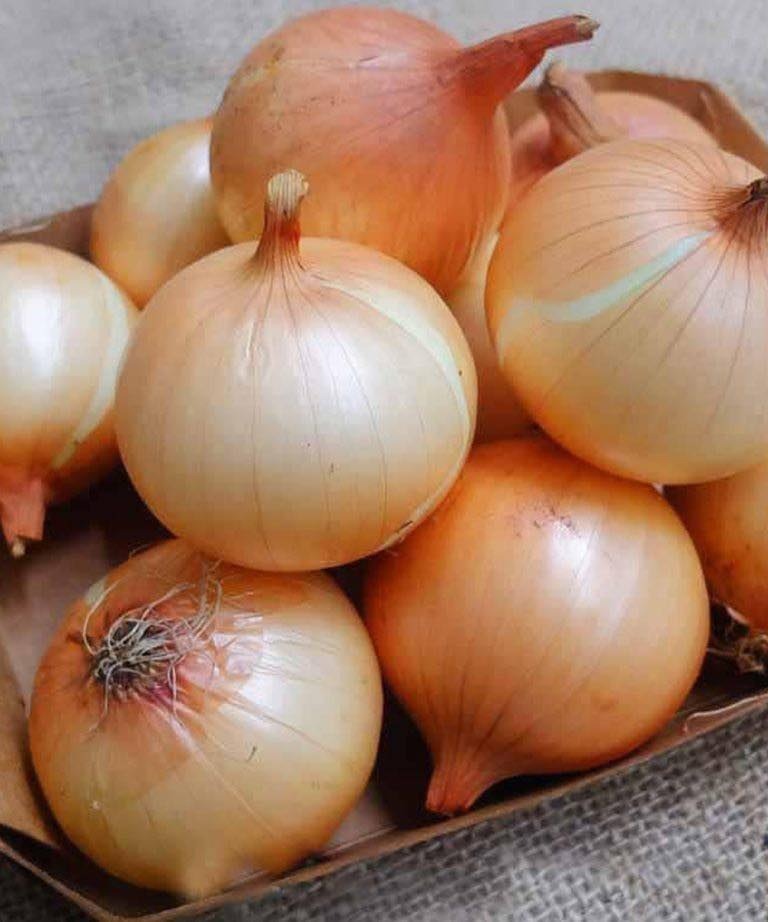
A sweet onion is a type of onion known for its mild, less pungent flavor compared to regular yellow or red onions. They’re ideal for recipes where you want onion flavor without overwhelming sharpness.
Key Facts
- Scientific name: Allium cepa
- Common varieties:
- Vidalia – Grown in Georgia, USA
- Walla Walla – From Washington State, USA
- Maui onion – From Hawaii
- Flavor profile: Mild, sweet, and juicy
- Color: Typically pale yellow or white, sometimes with a hint of green
Nutritional Information (per 100 g raw sweet onion)
- Calories: ~40 kcal
- Carbohydrates: 9 g
- Sugars: 4 g
- Fiber: 1.7 g
- Protein: 1 g
- Vitamins & minerals: Vitamin C, small amounts of B vitamins, potassium
Health Benefits
- Antioxidant-rich: Contains quercetin and other flavonoids that may reduce inflammation.
- Supports digestion: The fiber can aid in healthy gut function.
- Heart health: Compounds in onions may help lower cholesterol and blood pressure.
- Immune support: Vitamin C contributes to immune system function.
Culinary Uses
- Raw: In salads, sandwiches, or salsas for a sweet, mild bite
- Caramelized: Slowly cooked to bring out natural sweetness—perfect for burgers, pizzas, or tarts
- Grilled or roasted: Enhances natural sugars, excellent as a side or topping
- Pickled: Adds a tangy-sweet crunch to tacos, burgers, or salads
- Soups and stews: Adds depth without overpowering other flavors
💡 Cooking Tip: Because sweet onions have higher water and sugar content, they brown faster than other onions—keep an eye when sautéing or caramelizing to avoid burning.
If you want, I can give a simple recipe for caramelized sweet onions that works as a topping for burgers, steaks, or sandwiches.
Do you want me to provide that recipe?
