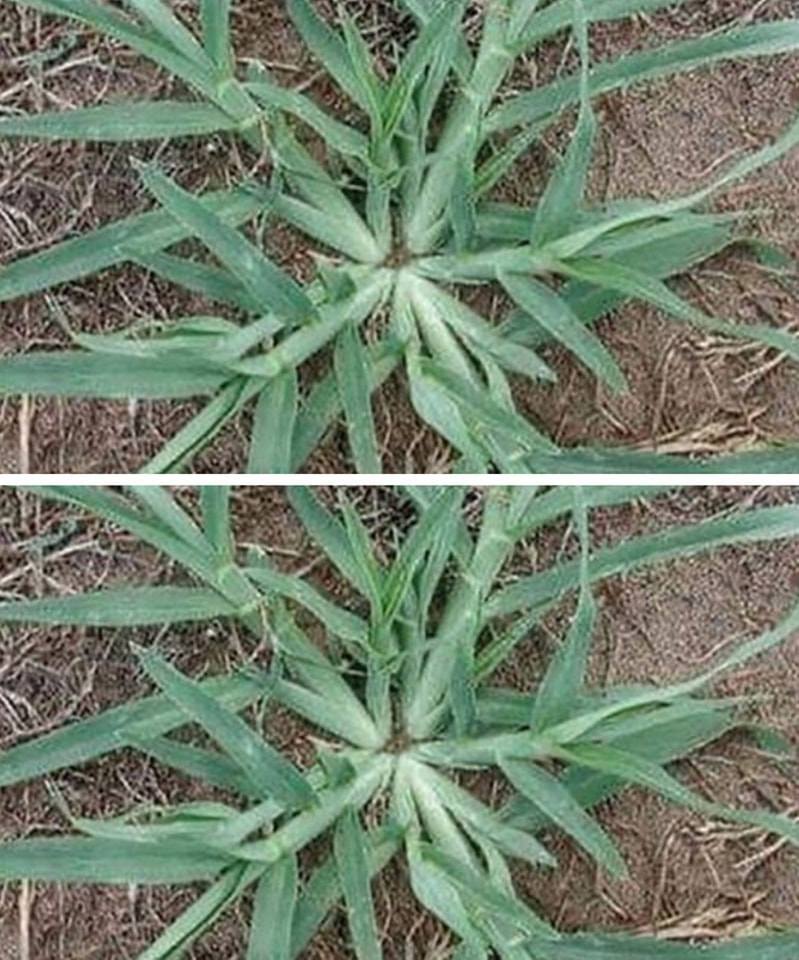
Digitaria sanguinalis, commonly known as large crabgrass or hairy crabgrass, is a fast-growing, warm-season grass that’s considered a weed in many lawns and gardens but is also used as forage in some regions.
Key Facts
- Scientific name: Digitaria sanguinalis
- Common names: Large crabgrass, hairy crabgrass
- Family: Poaceae (grass family)
- Origin: Likely native to Eurasia; now widespread globally
- Type: Annual grass
Characteristics
- Growth: Low-growing with spreading stems that root at nodes
- Leaves: Hairy, linear, 2–10 cm long
- Seeds: Produces spikelets in finger-like clusters (hence “Digitaria”)
- Height: Typically 30–90 cm
Habitat
- Thrives in disturbed soils, lawns, gardens, roadsides, and agricultural fields
- Prefers full sun and warm temperatures
Uses
- Forage grass: Sometimes used for livestock grazing or fodder in certain regions
- Soil stabilization: Can help prevent erosion in disturbed areas
- Wildlife: Seeds are eaten by birds and small mammals
Management (if considered a weed)
- Regular mowing or cutting can limit spread
- Pre-emergent herbicides in lawns can prevent germination
- Maintaining dense, healthy turf reduces infestation
💡 Interesting fact: Large crabgrass grows quickly and can outcompete many lawn grasses, which is why it’s often labeled a nuisance in residential lawns.
I can also provide a guide on controlling Digitaria sanguinalis in gardens or lawns if you want to manage it effectively.
Do you want me to provide that control guide?
