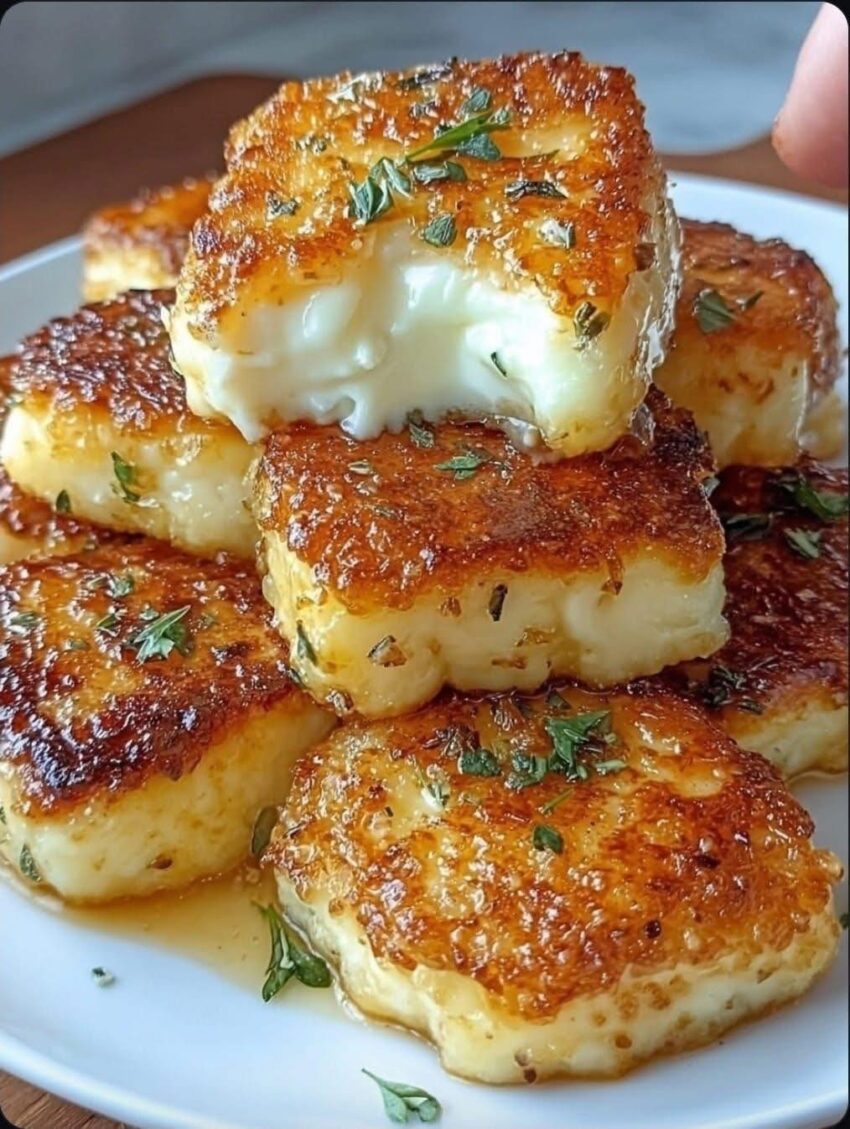
Halloumi is a semi-firm, brined cheese originating from Cyprus, made traditionally from a mixture of goat’s and sheep’s milk, though cow’s milk is also used in modern versions. It’s famous for its high melting point, which makes it ideal for grilling or frying.
Nutritional Highlights (per 100 g)
- Calories: ~300 kcal
- Protein: 20–22 g
- Fat: 25 g (mostly saturated)
- Calcium: ~700 mg (great for bones)
- Sodium: High, due to brining
Characteristics
- Texture: Firm, slightly rubbery, squeaky when eaten fresh.
- Flavor: Mild, salty, tangy, sometimes with a hint of mint (traditional in Cyprus).
- Cooking: Retains shape when fried, grilled, or baked, making it perfect for salads, sandwiches, or appetizers.
Cooking Ideas
- Grilled/Fried: Slice ½-inch thick, brush with olive oil, and grill or pan-fry until golden. Serve with lemon juice.
- Salads: Combine grilled halloumi with tomatoes, cucumbers, olives, and herbs for a Mediterranean salad.
- Skewers: Alternate halloumi cubes with vegetables for kabobs.
- Baking: Bake with roasted vegetables or drizzle with honey for a sweet-savory dish.
💡 Tips:
- Pat dry before frying or grilling to avoid splattering.
- Halloumi is naturally salty; you usually don’t need to add extra salt.
- Can be frozen, but texture may become slightly firmer after thawing.
I can also give you a quick grilled halloumi recipe with a Mediterranean twist that’s easy and delicious.
Do you want me to do that?
