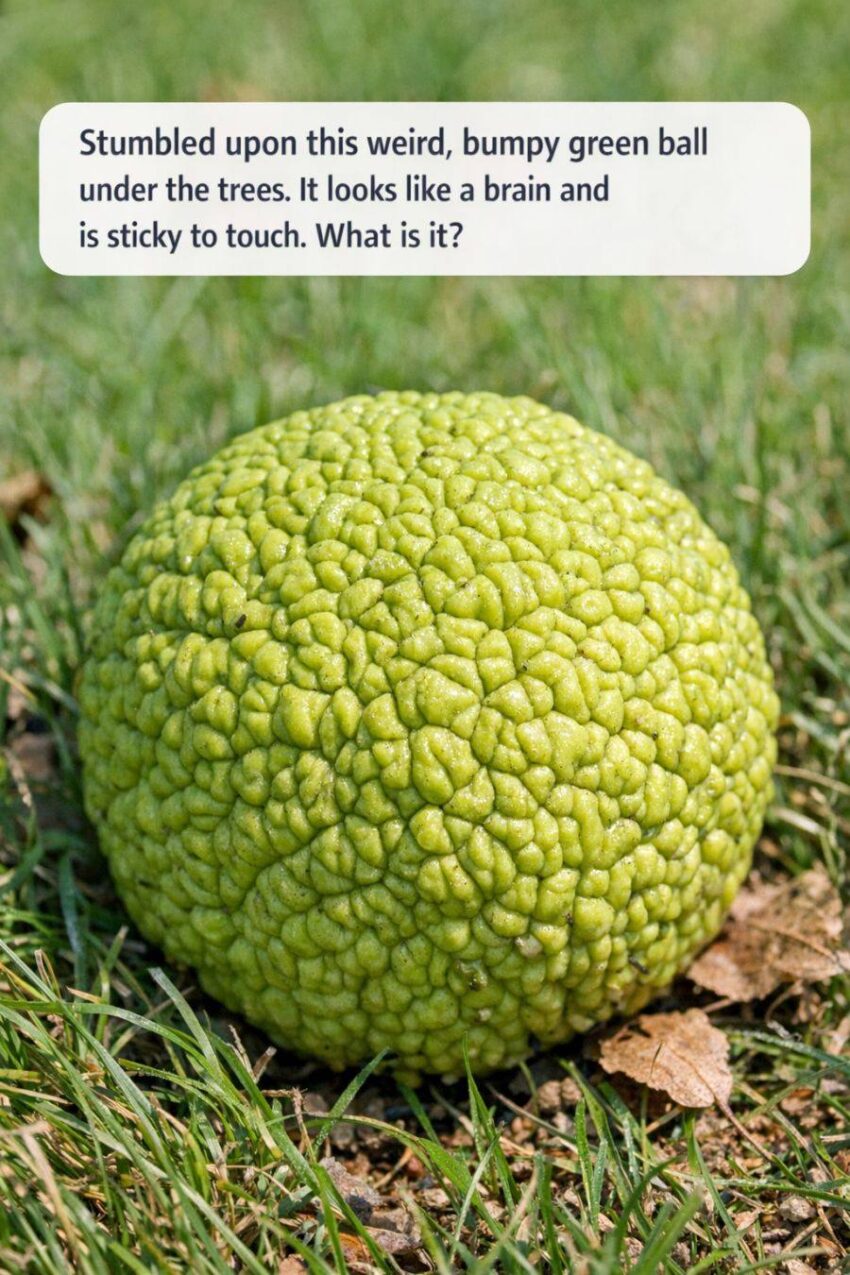
Osage orange (Maclura pomifera) is a small deciduous tree native to the south-central United States. 🌳 Despite its name, the fruit is not related to oranges and is generally inedible for humans.
Key Features
- Fruit: Large, round, green, and bumpy, about the size of a softball
- Leaves: Glossy, dark green, turning yellow in fall
- Height: 30–50 feet; dense branching
- Wood: Extremely hard, durable, and rot-resistant
Common Uses
- Windbreaks & hedges: Historically planted as “living fences” before barbed wire
- Woodworking: Dense wood used for bows, fence posts, and carving
- Ornamental planting: Provides shade and visual interest
- Natural insect deterrent: Some place the fruit indoors, though scientific evidence is limited
Interesting Facts
- Named after the Osage Nation, Native Americans from the tree’s native region
- Wildlife like squirrels may gnaw on the fruit, but humans generally do not eat it
- The wood is prized for its strength, elasticity, and resistance to rot
💡 Tip: Osage orange thrives in well-drained soil and full sun and is highly drought-tolerant once established.
I can also provide a guide to using Osage orange wood for crafts and DIY projects if you want.
